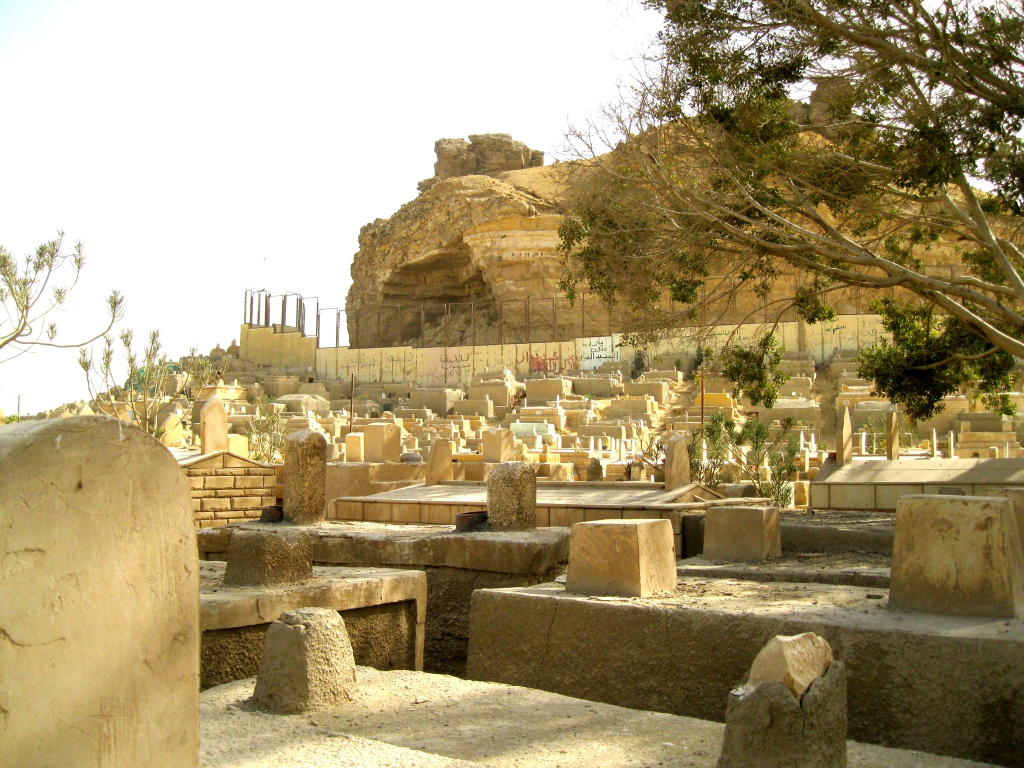
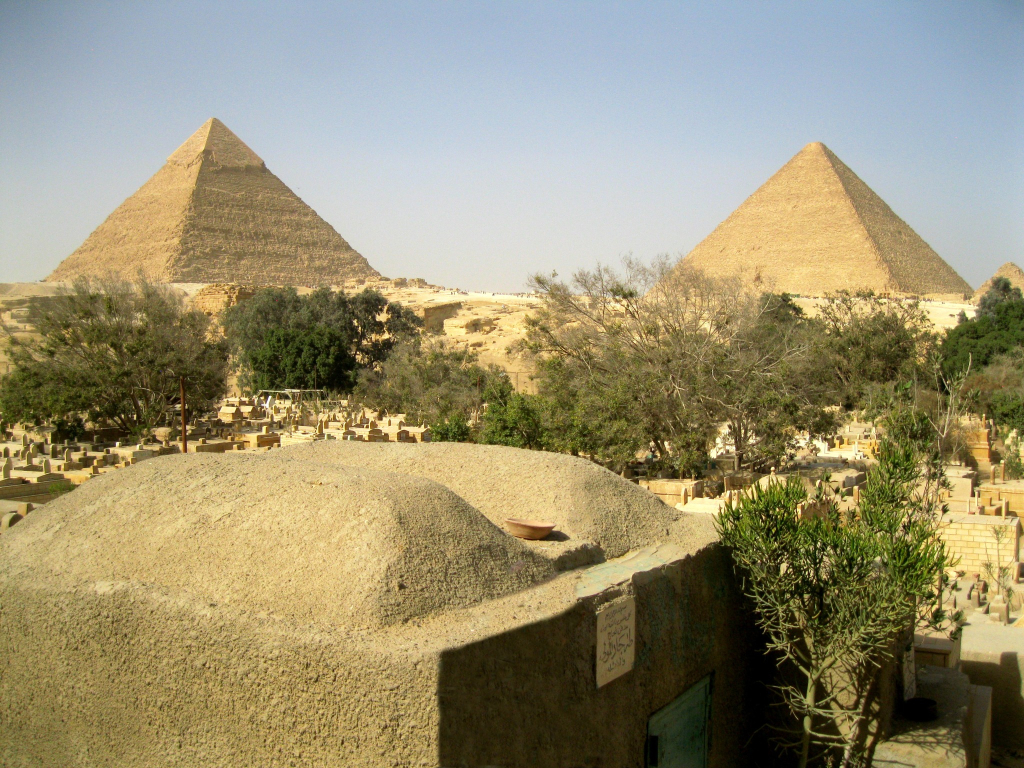
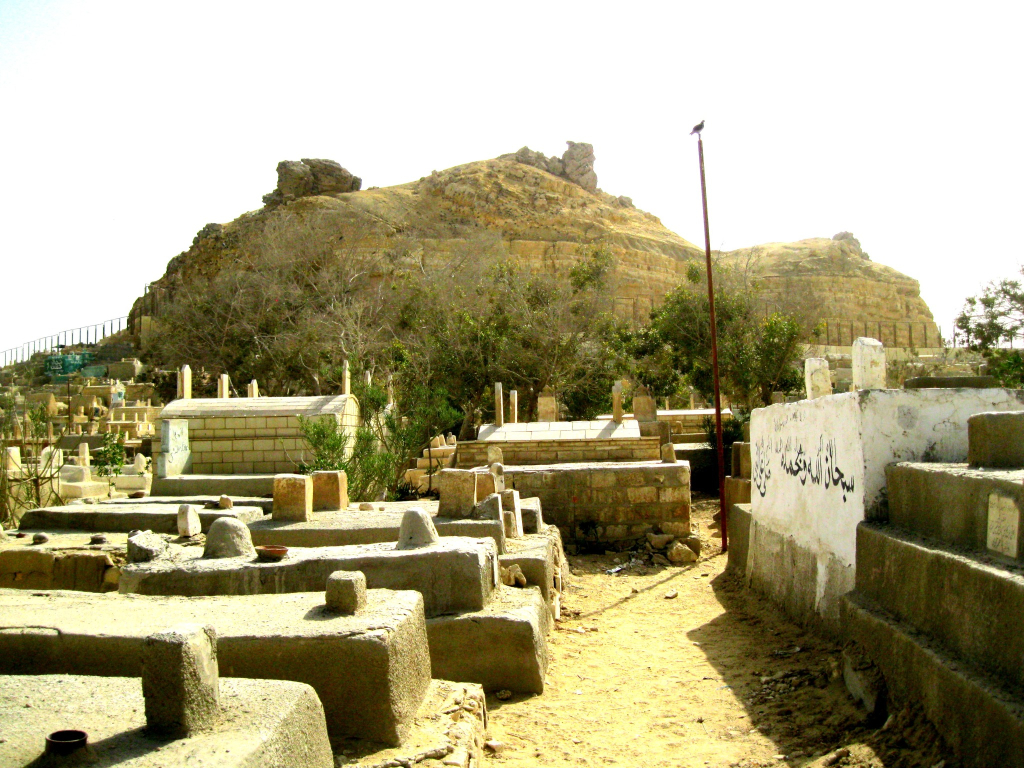
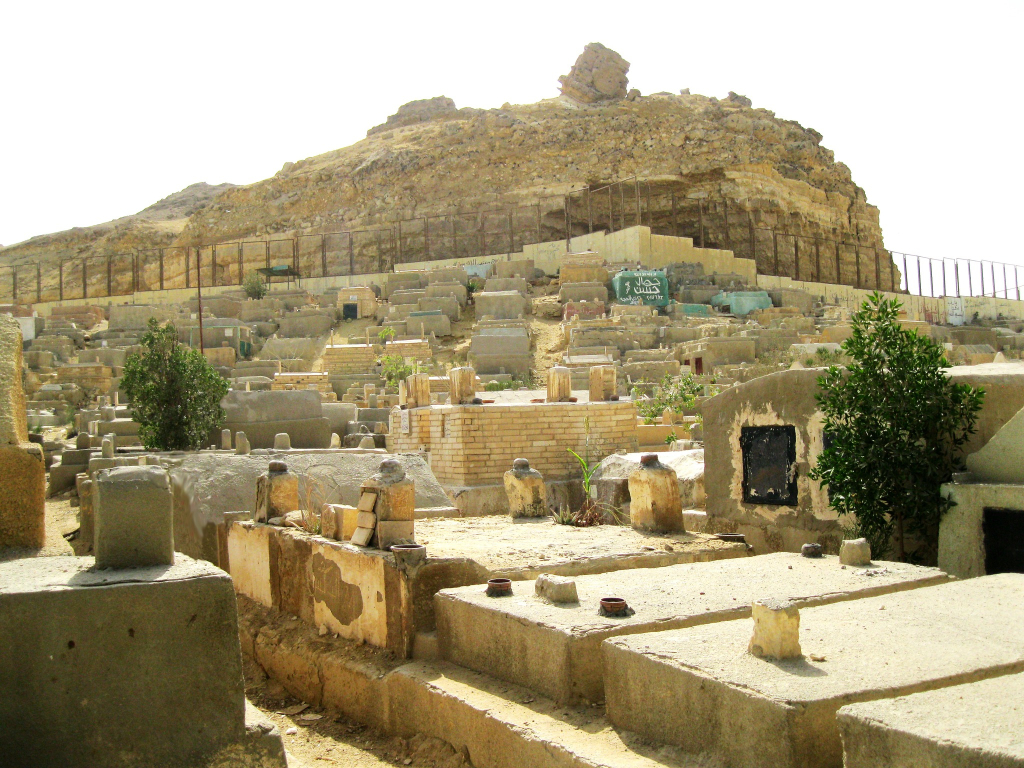
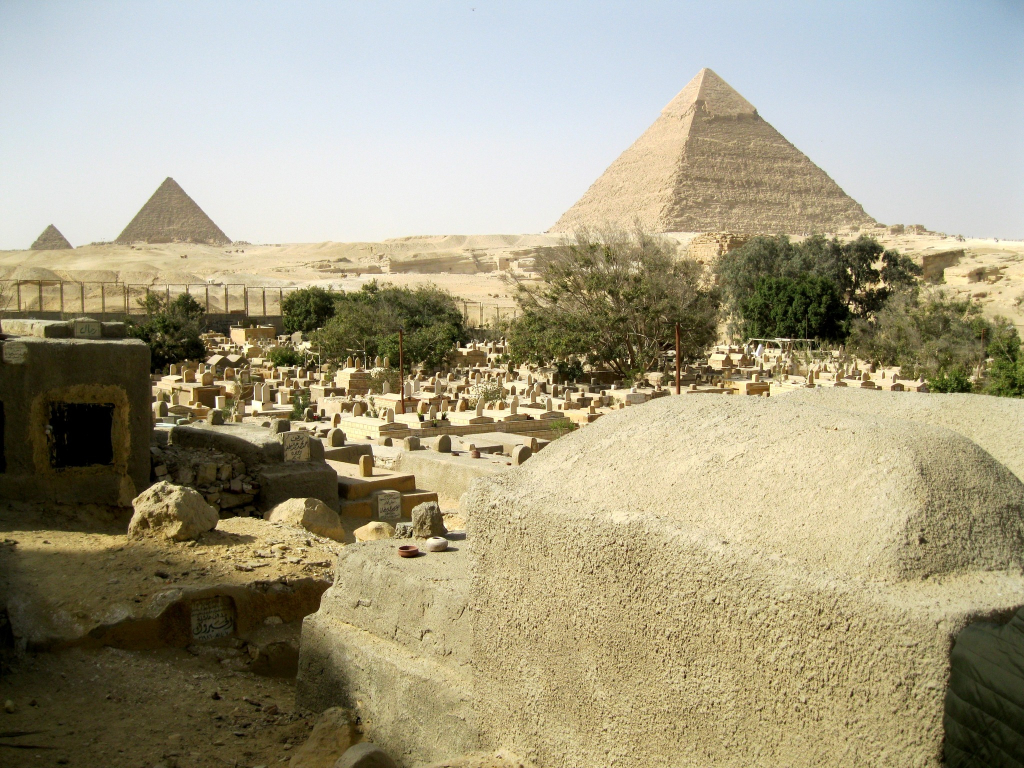
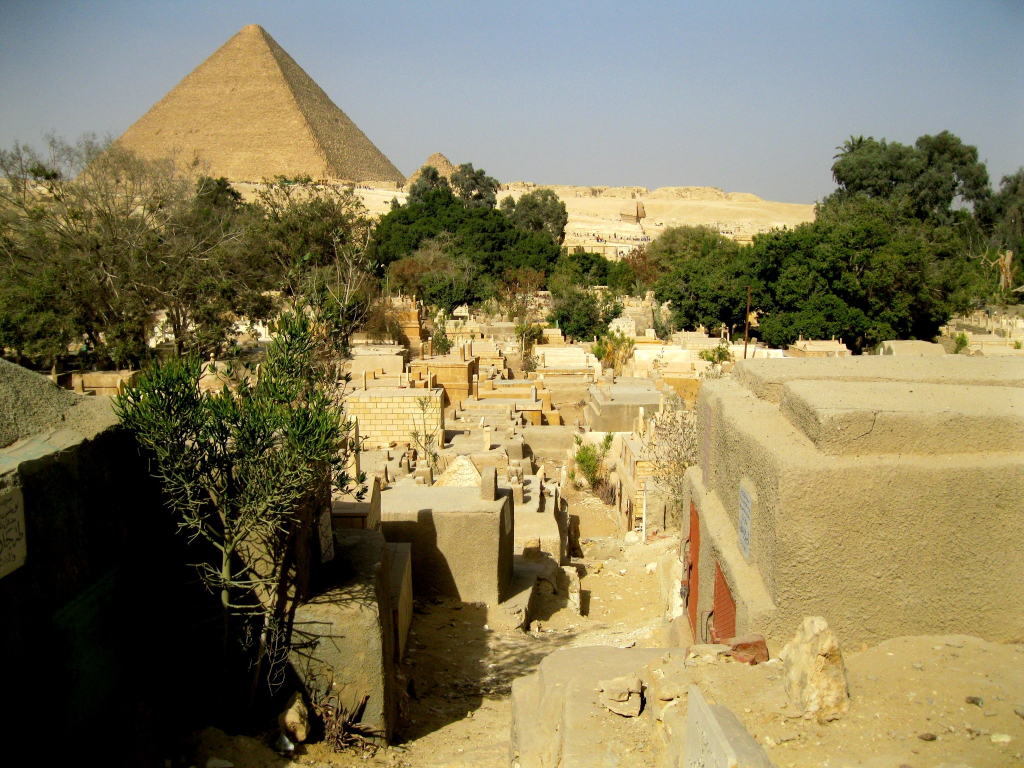
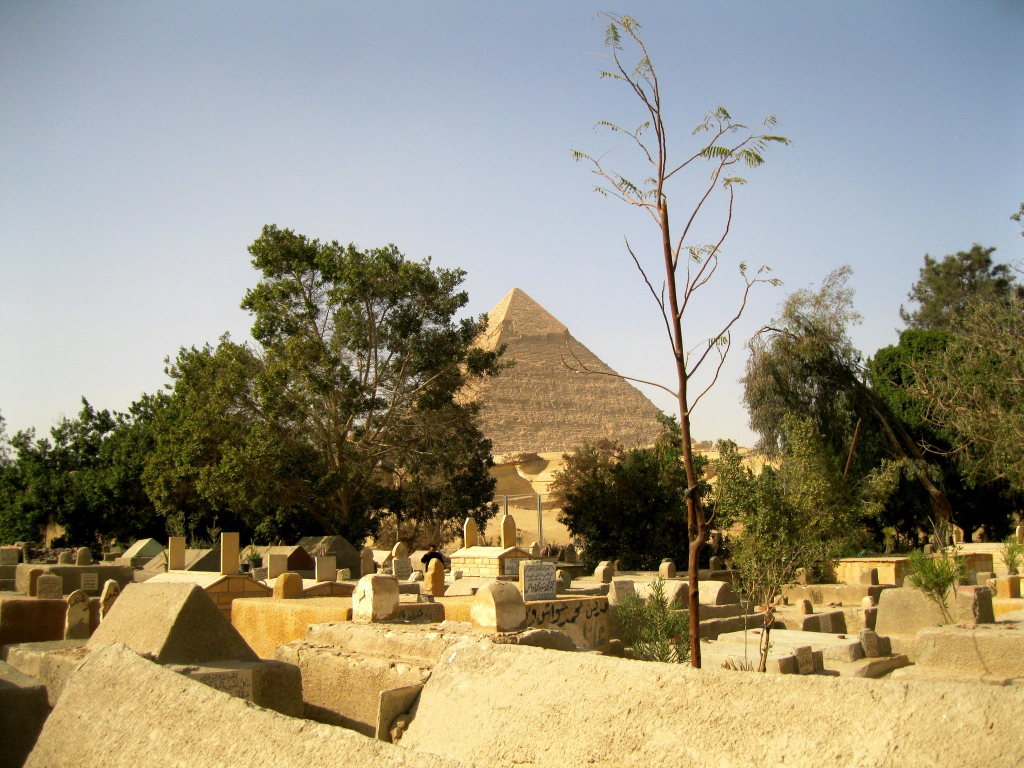
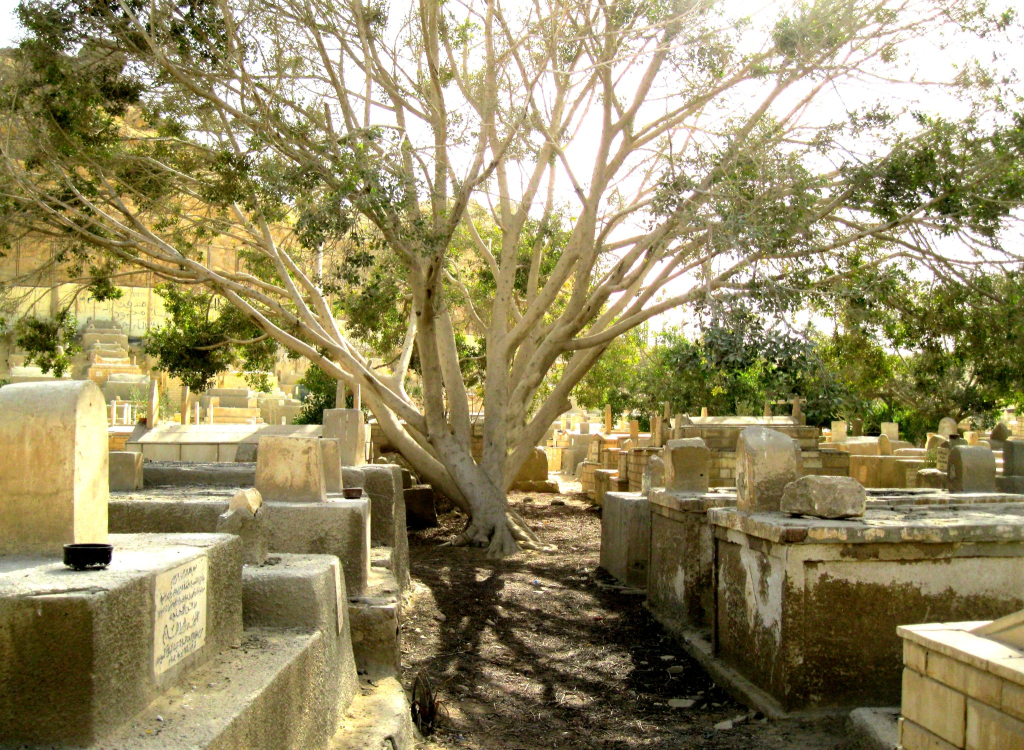
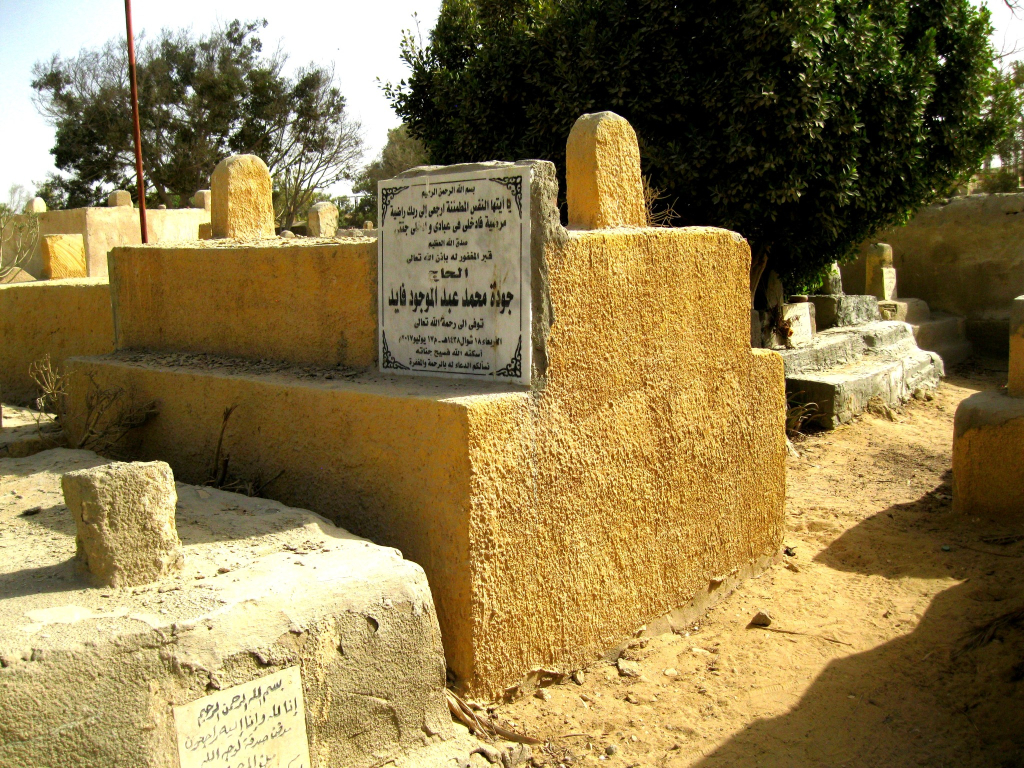
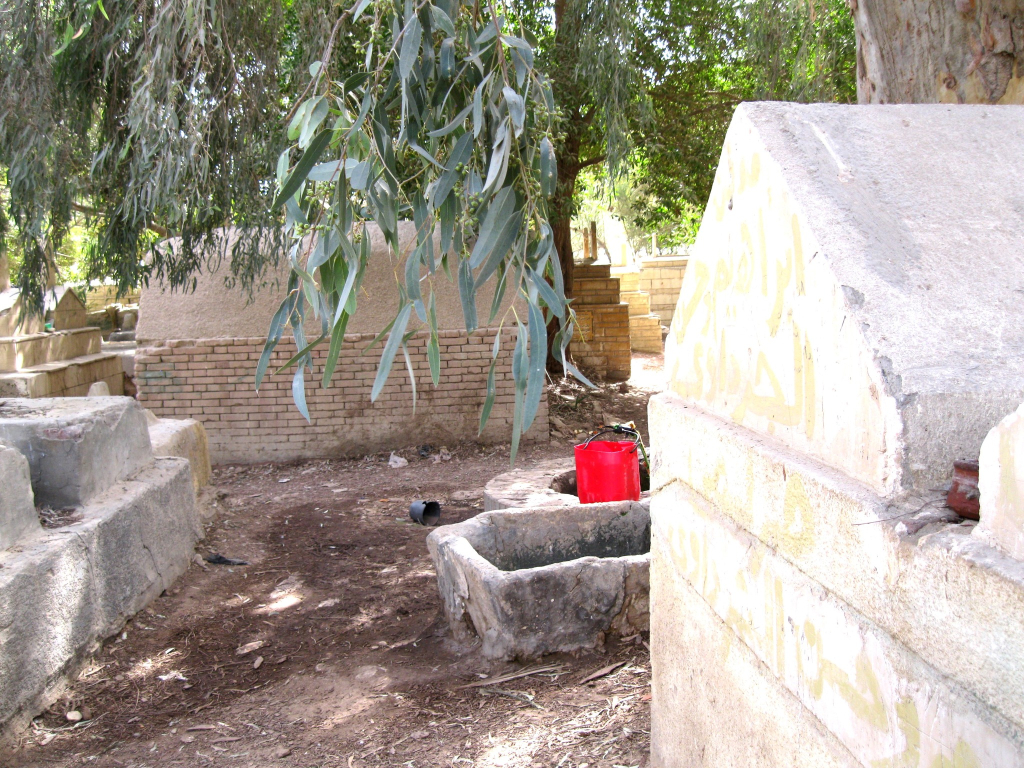
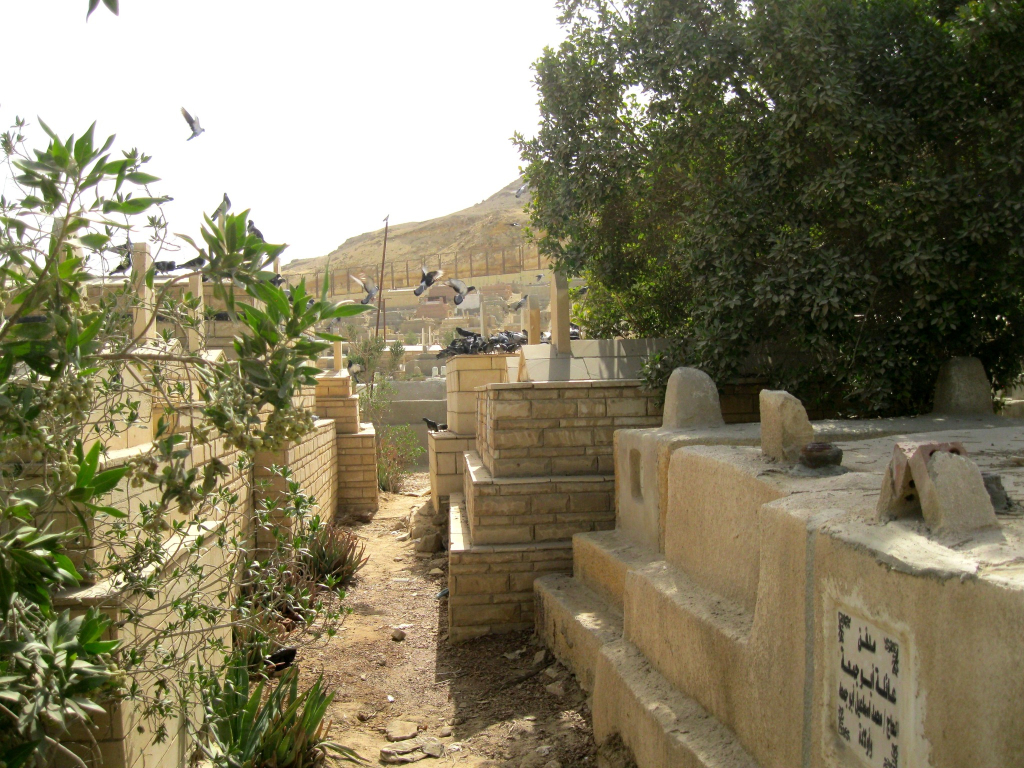
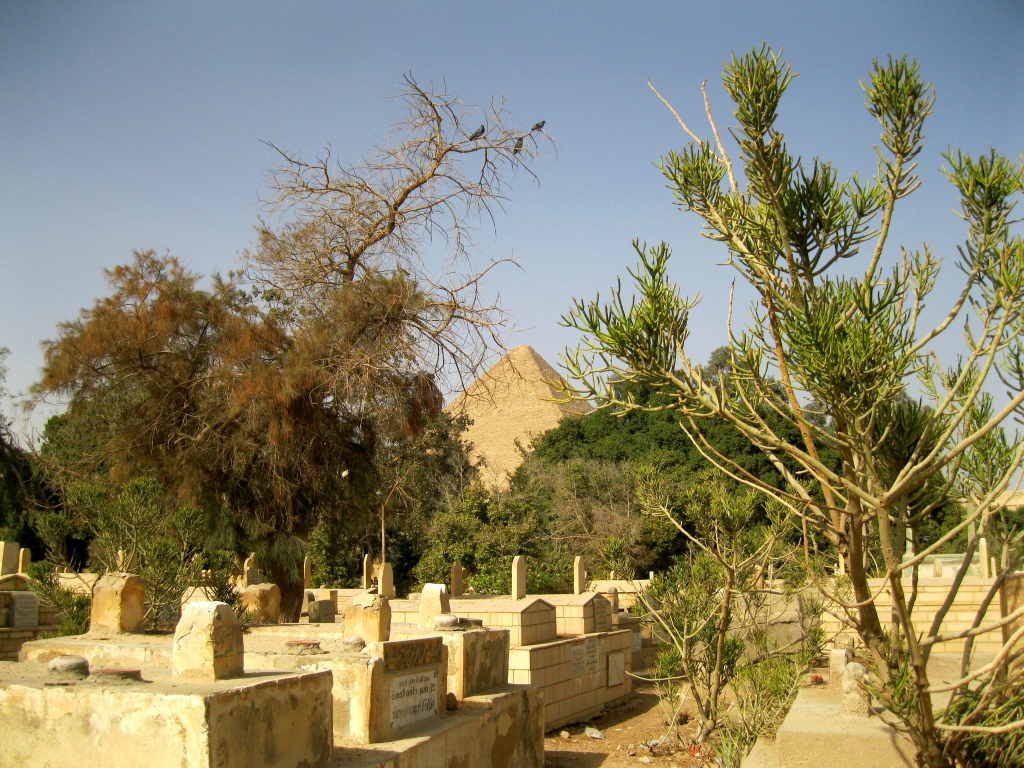
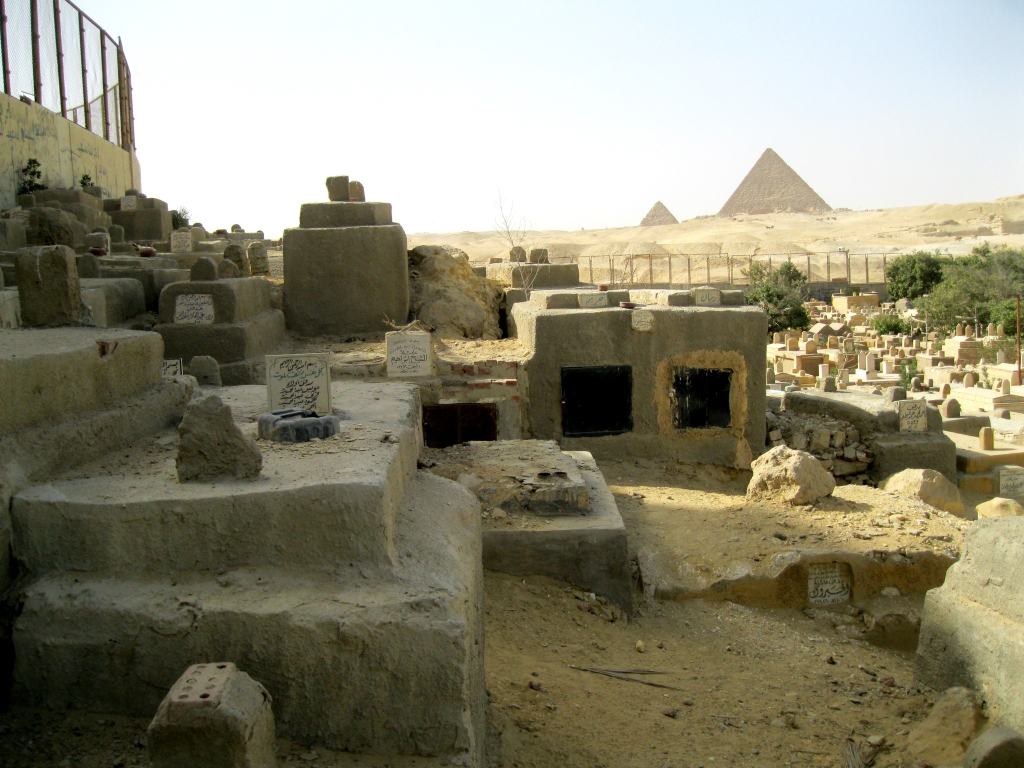
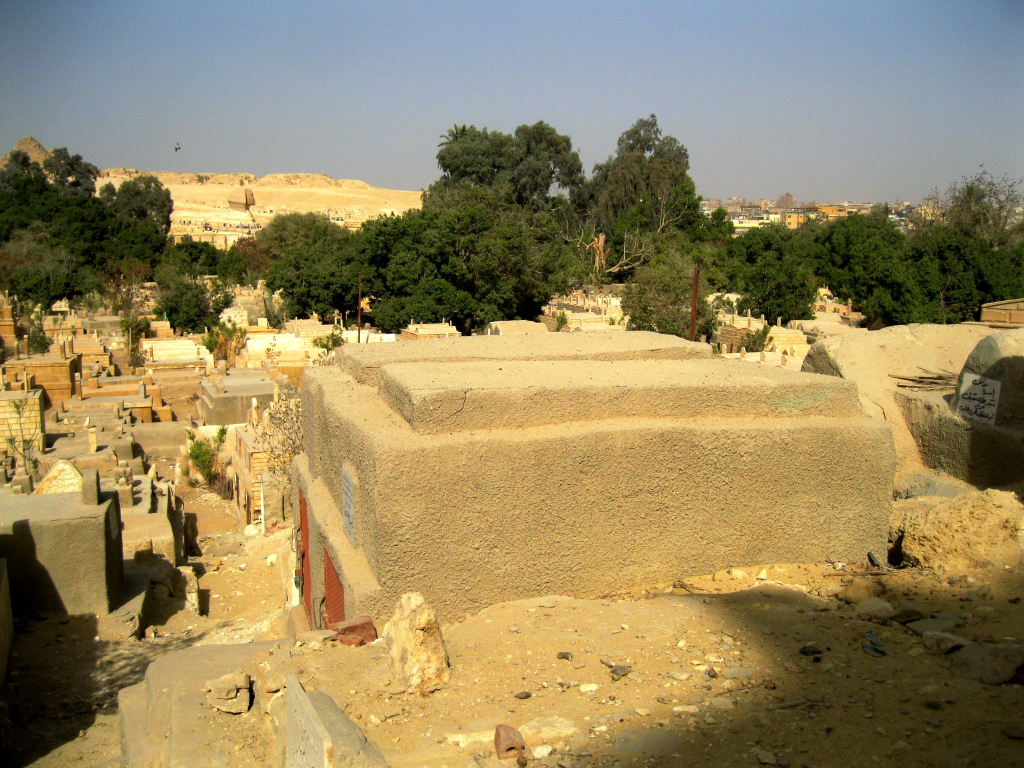
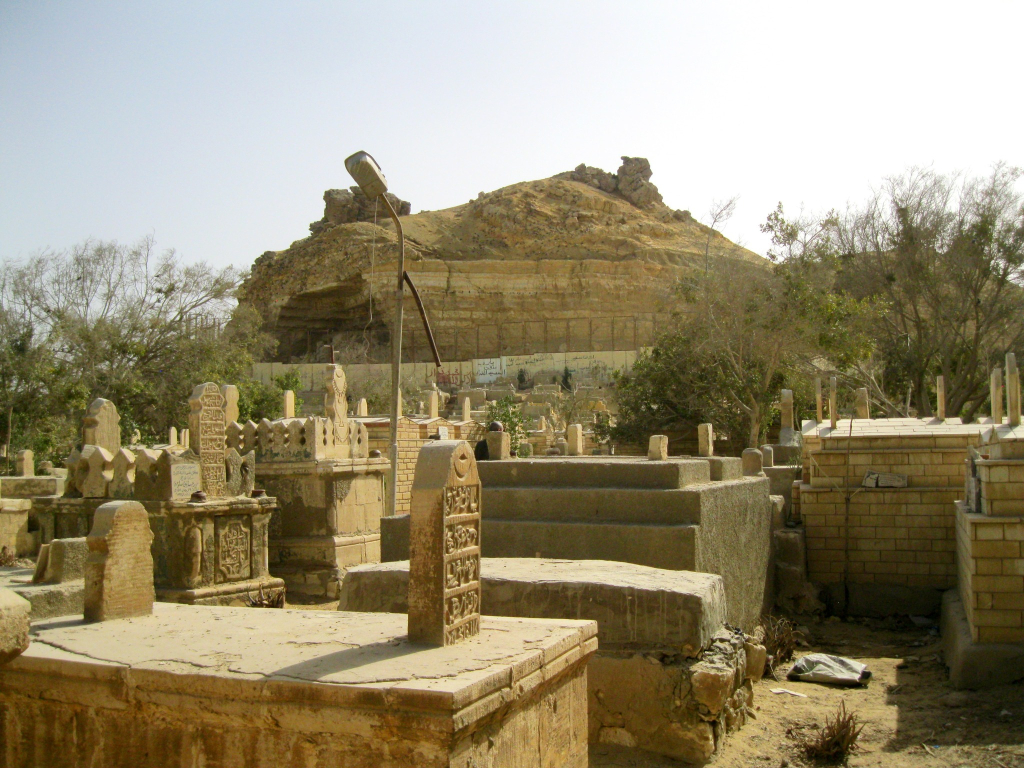
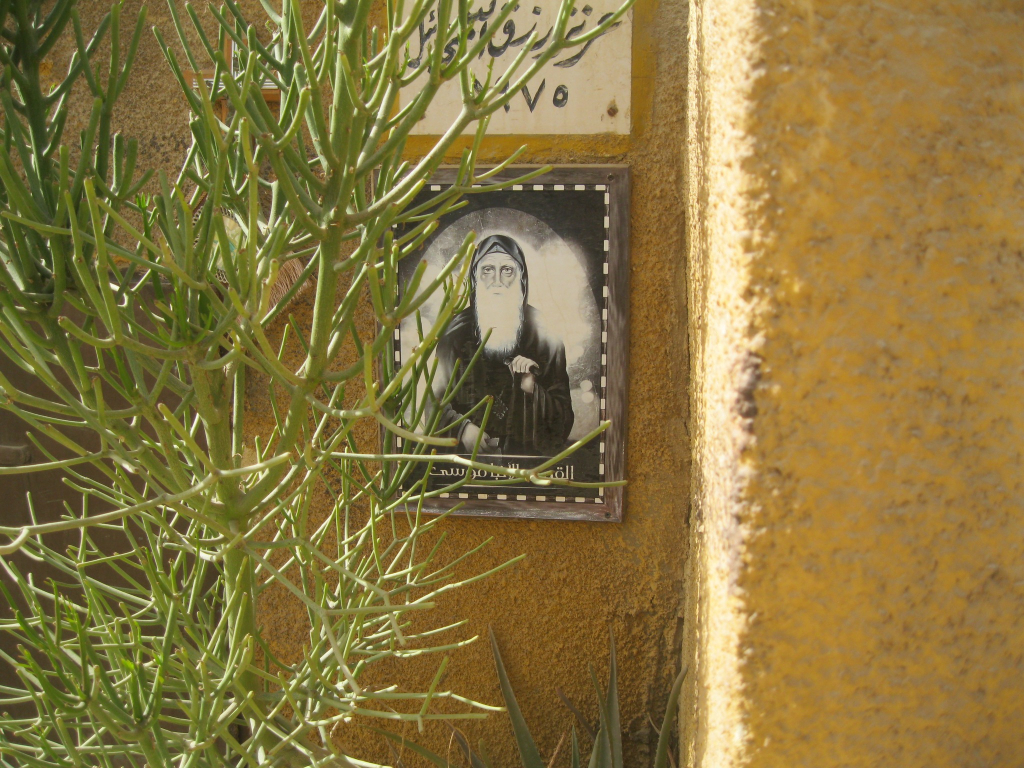
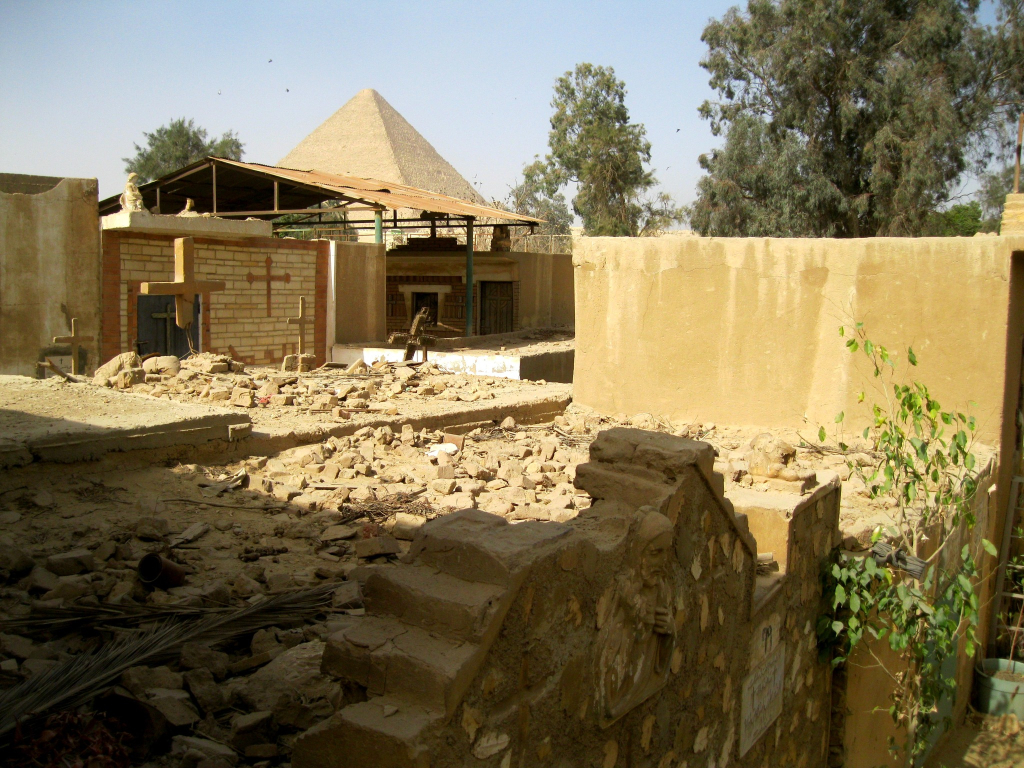
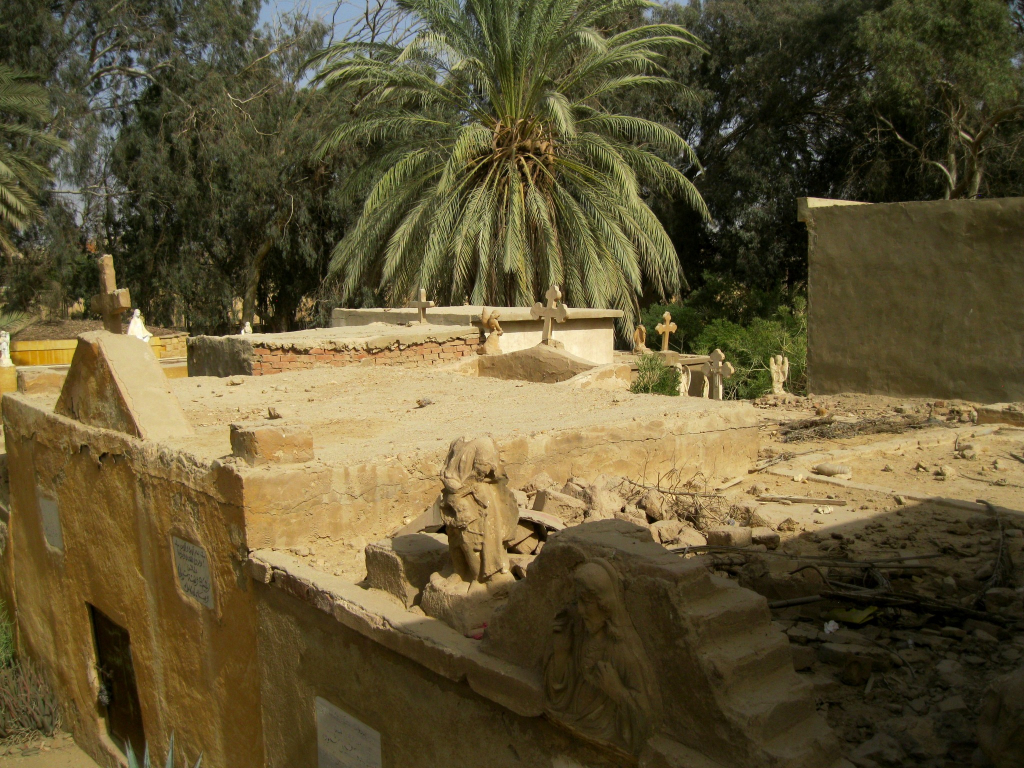
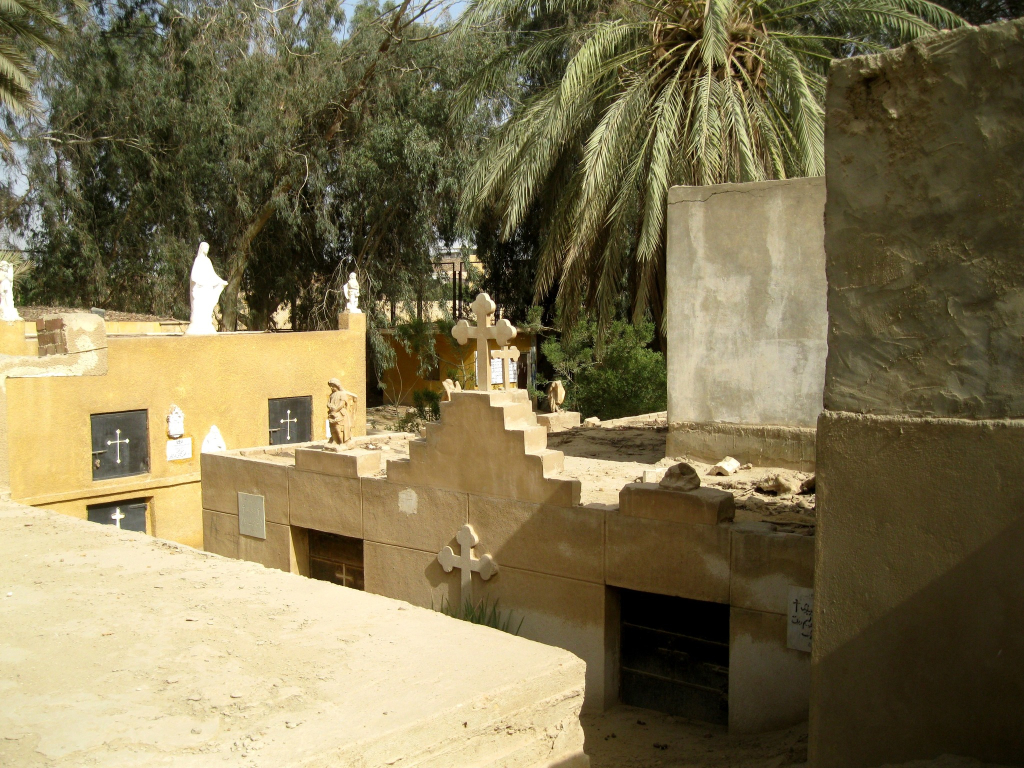
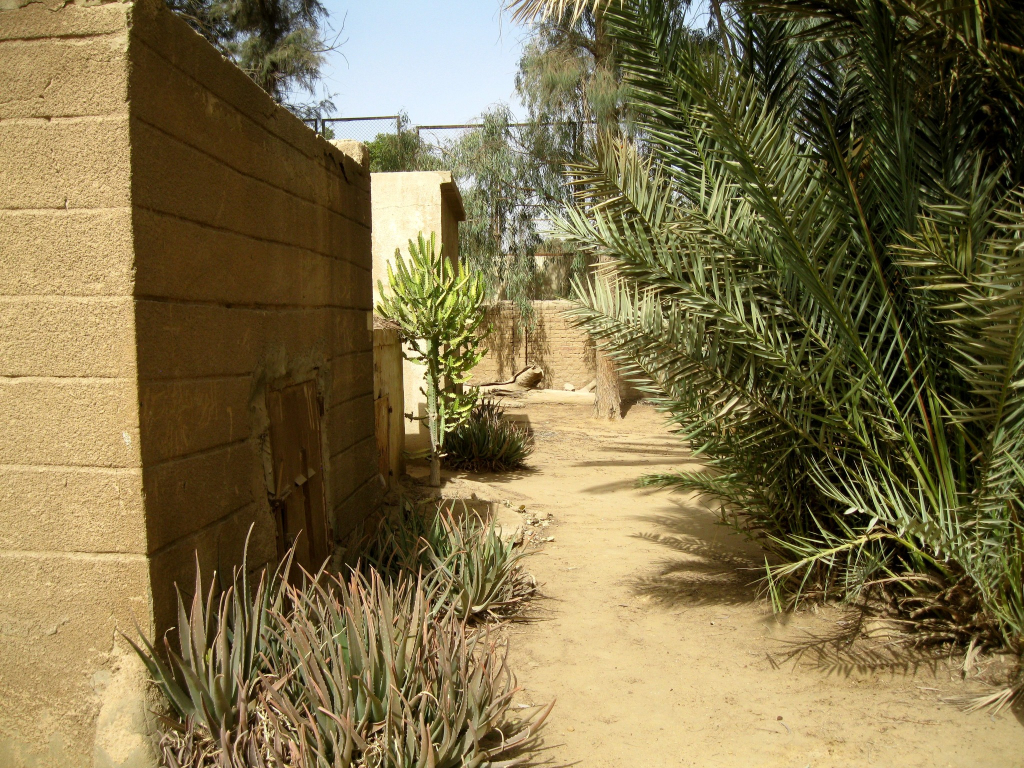
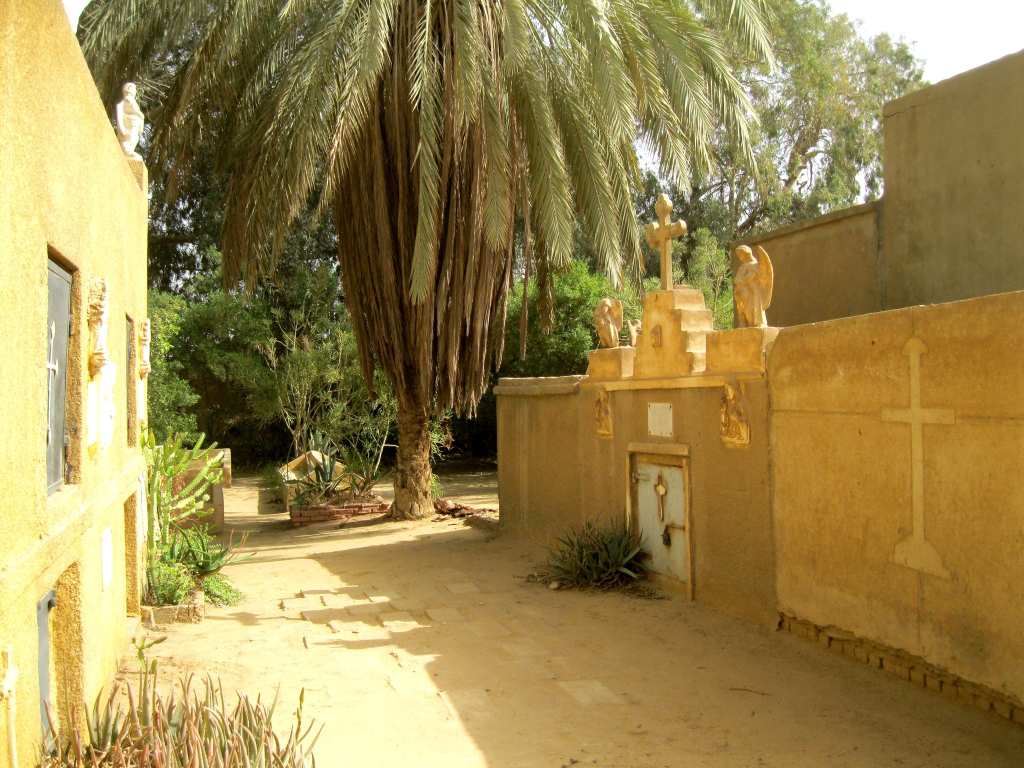
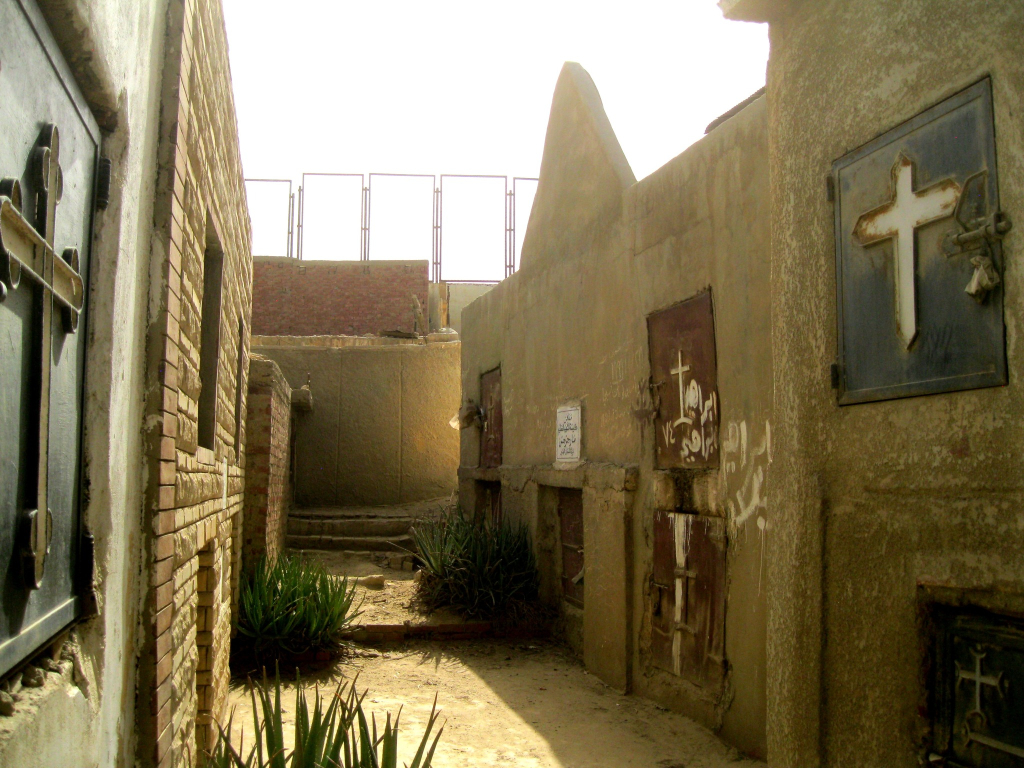
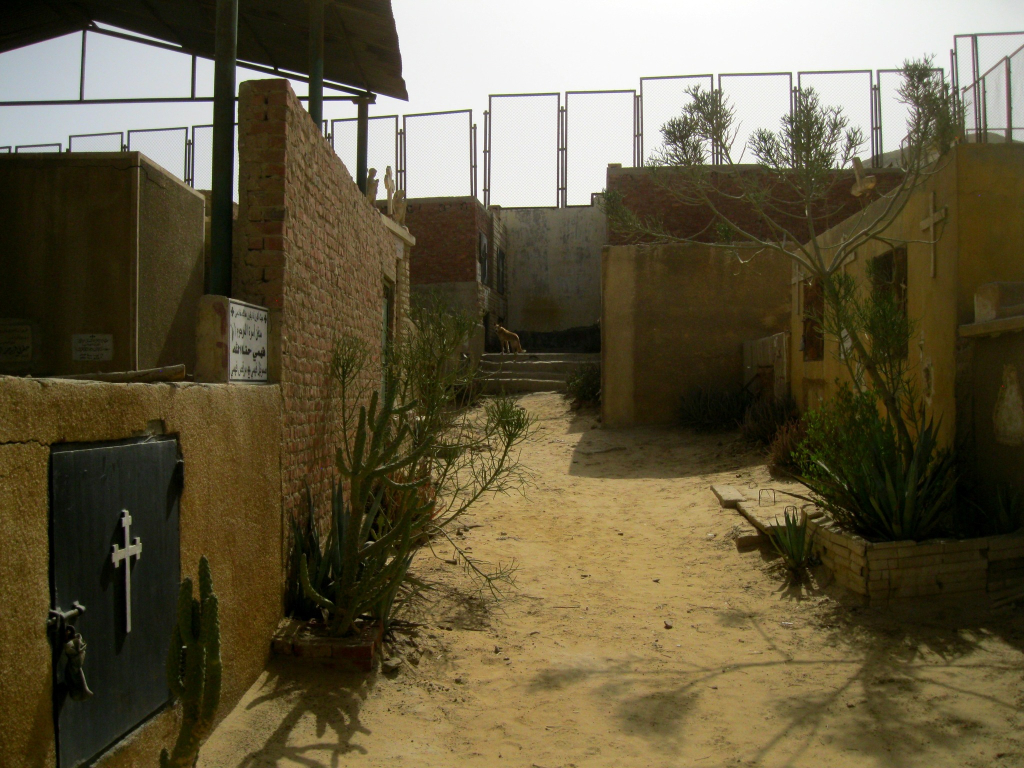
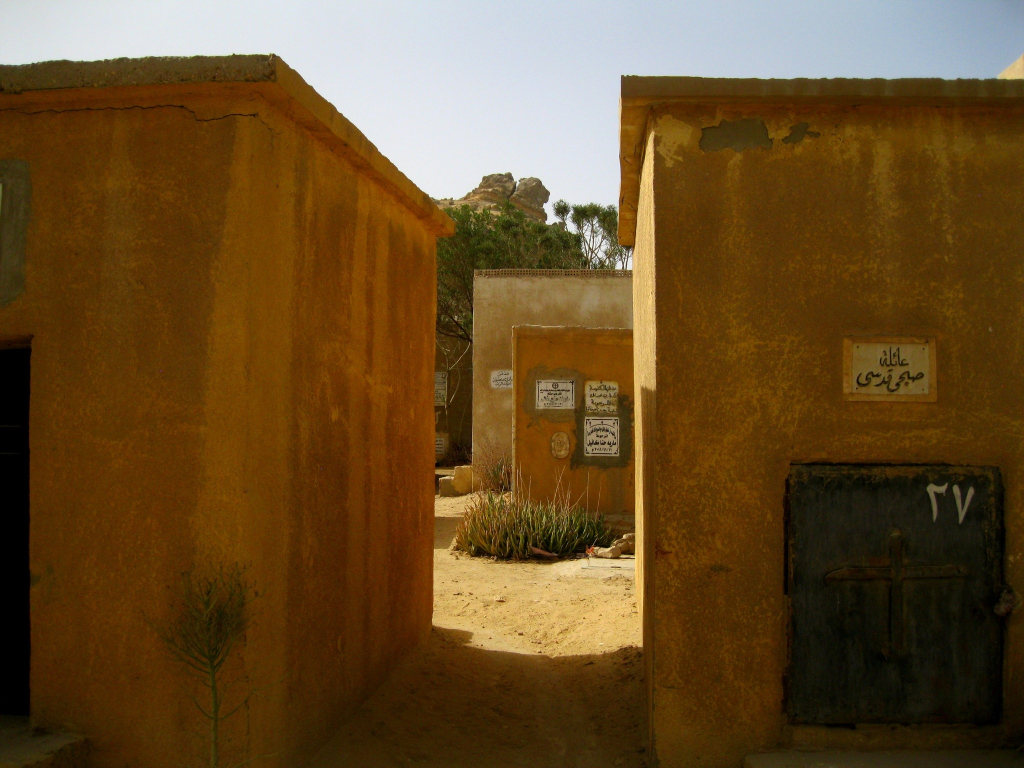
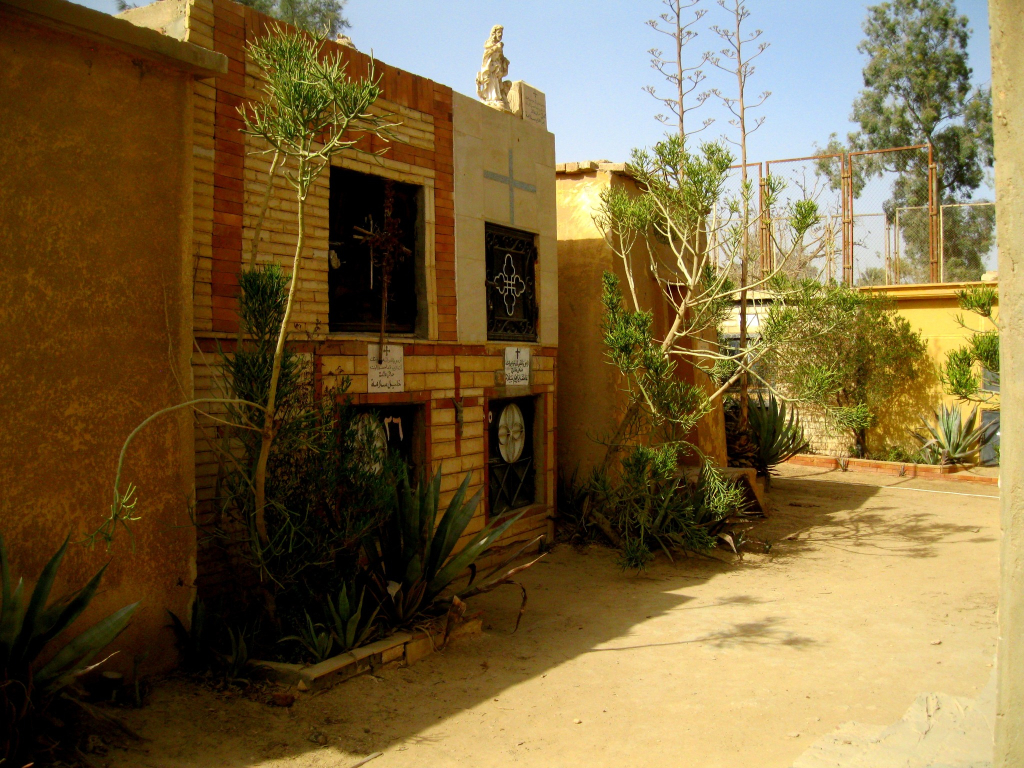
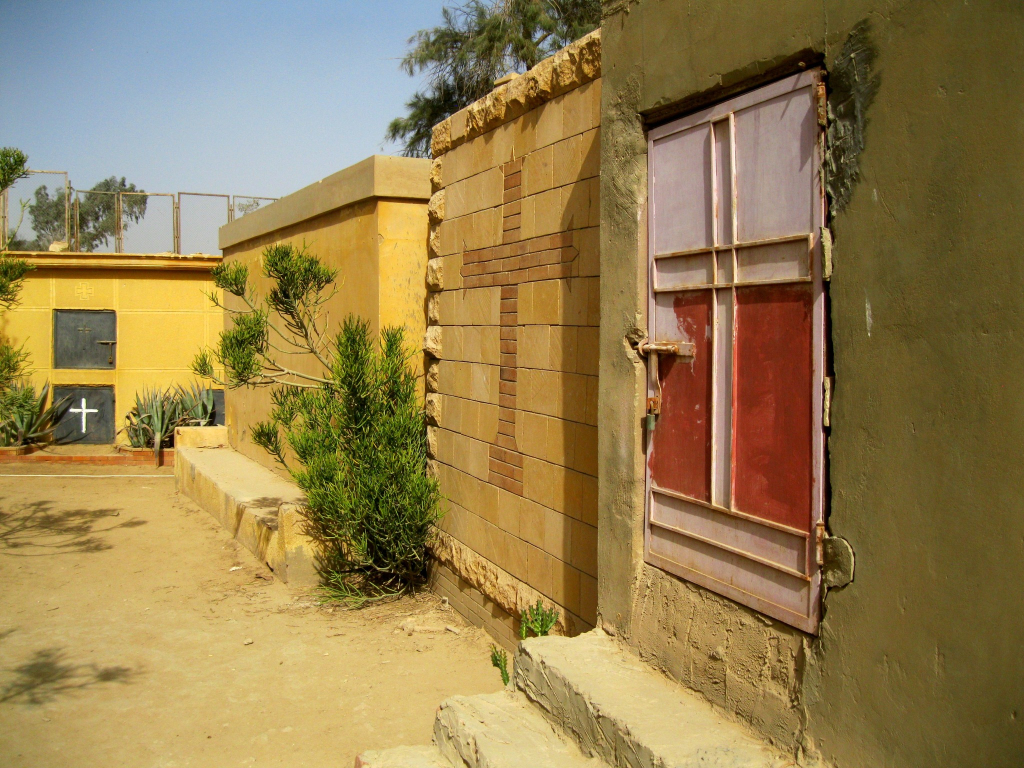
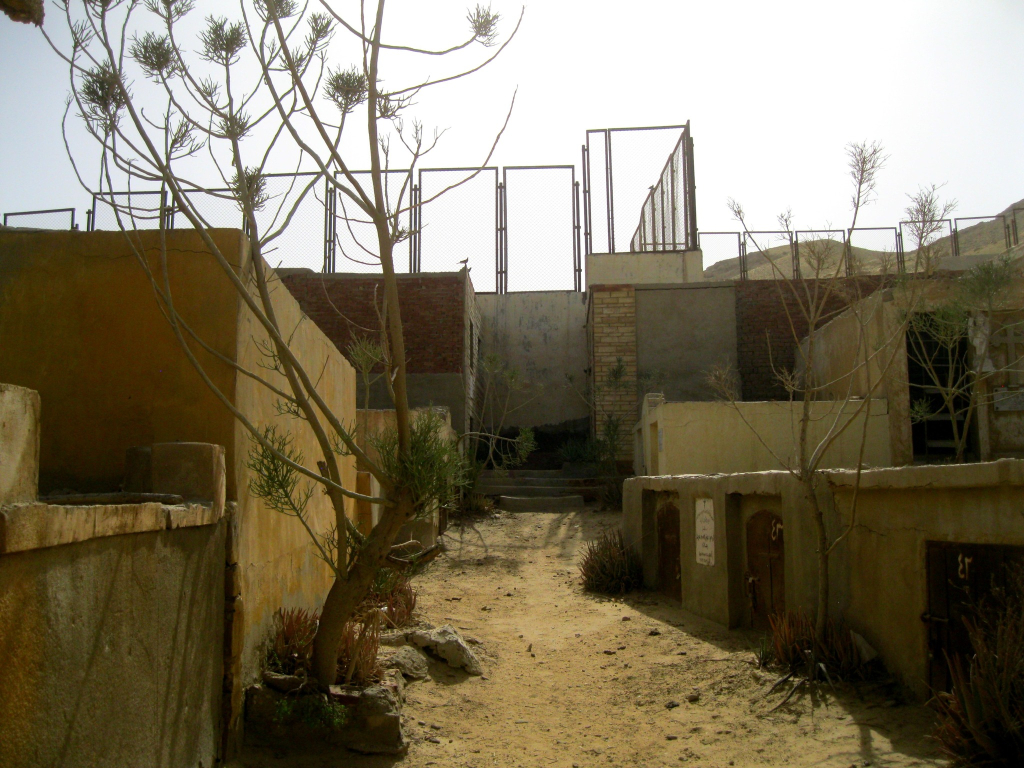
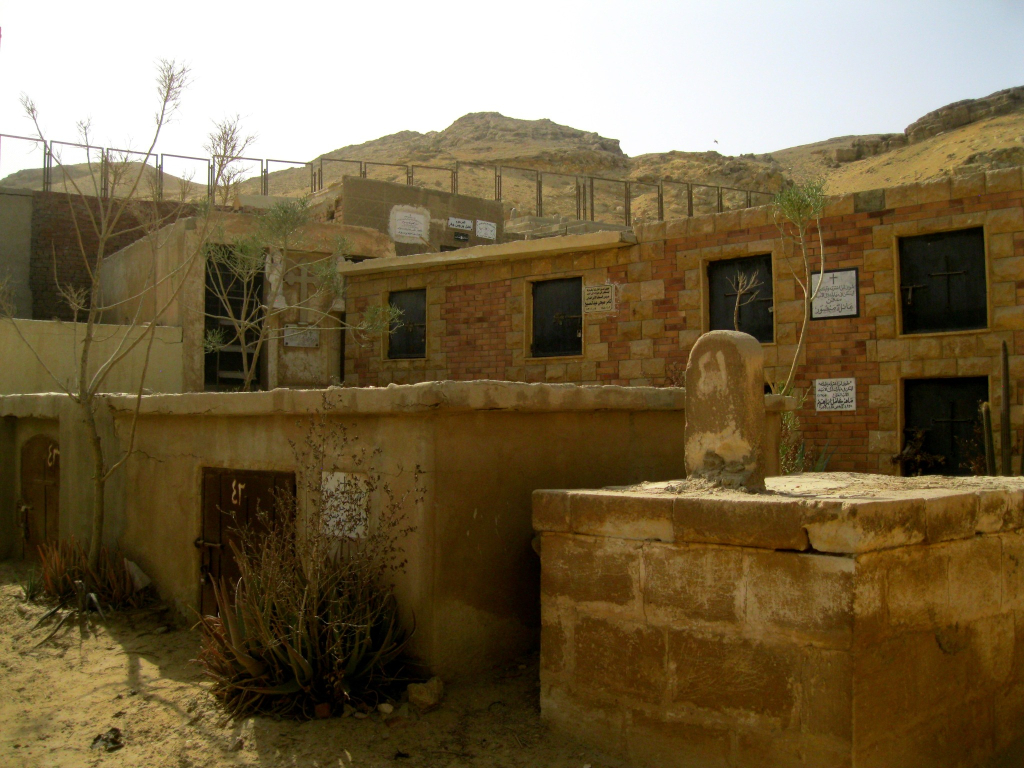
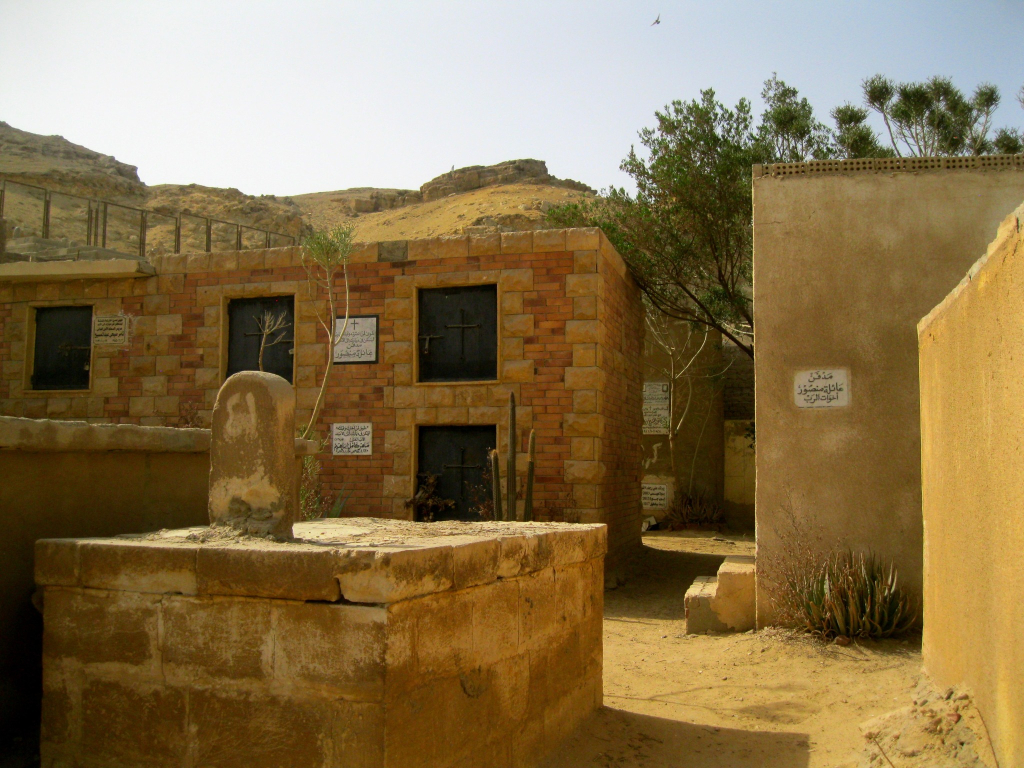
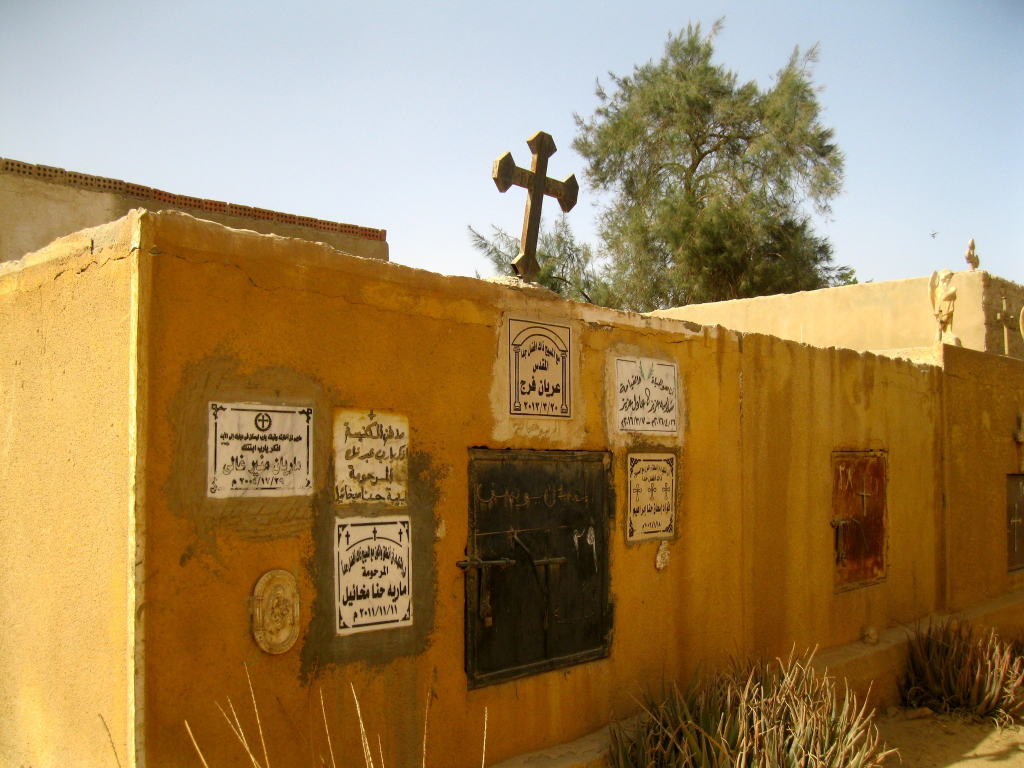
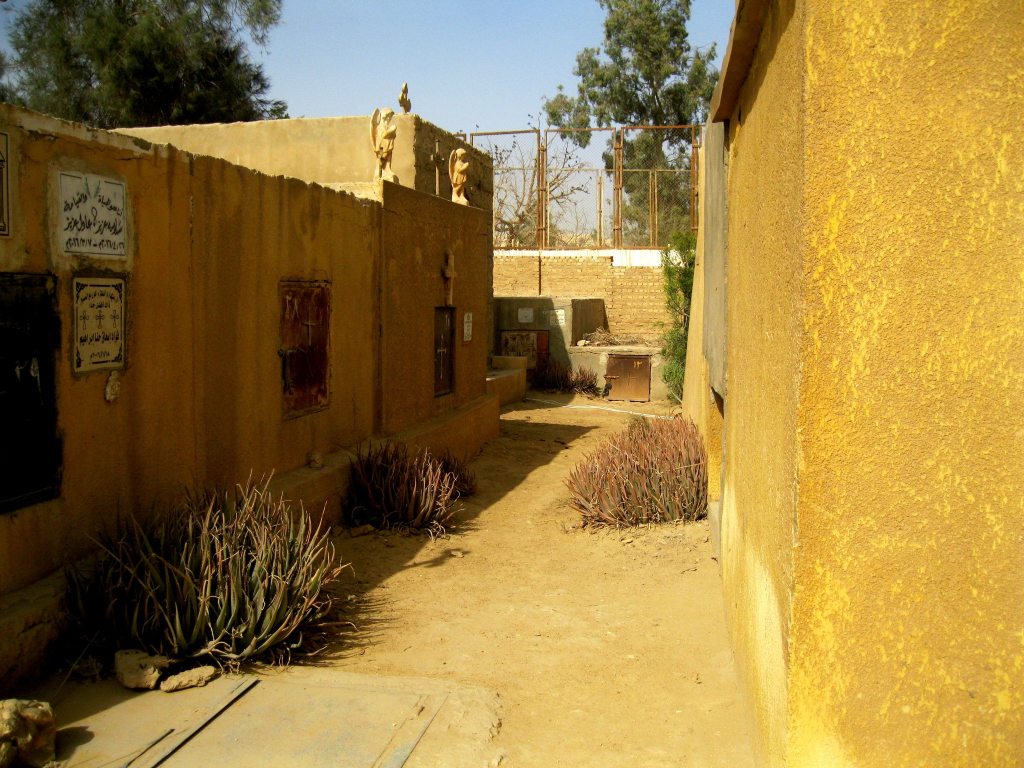
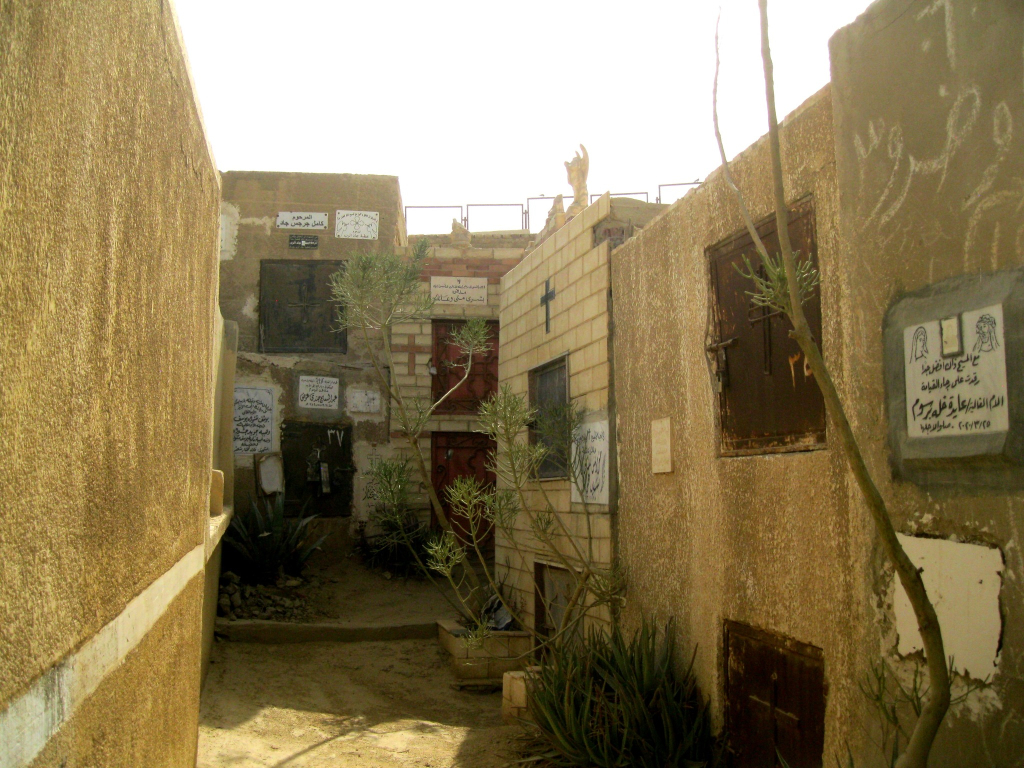
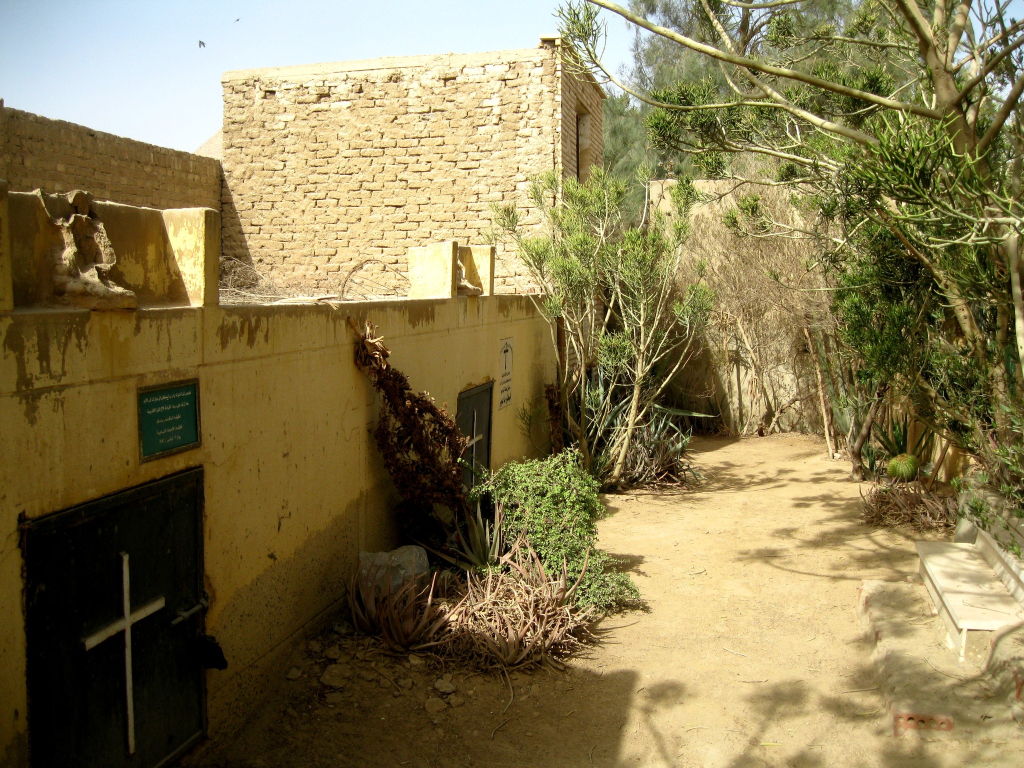
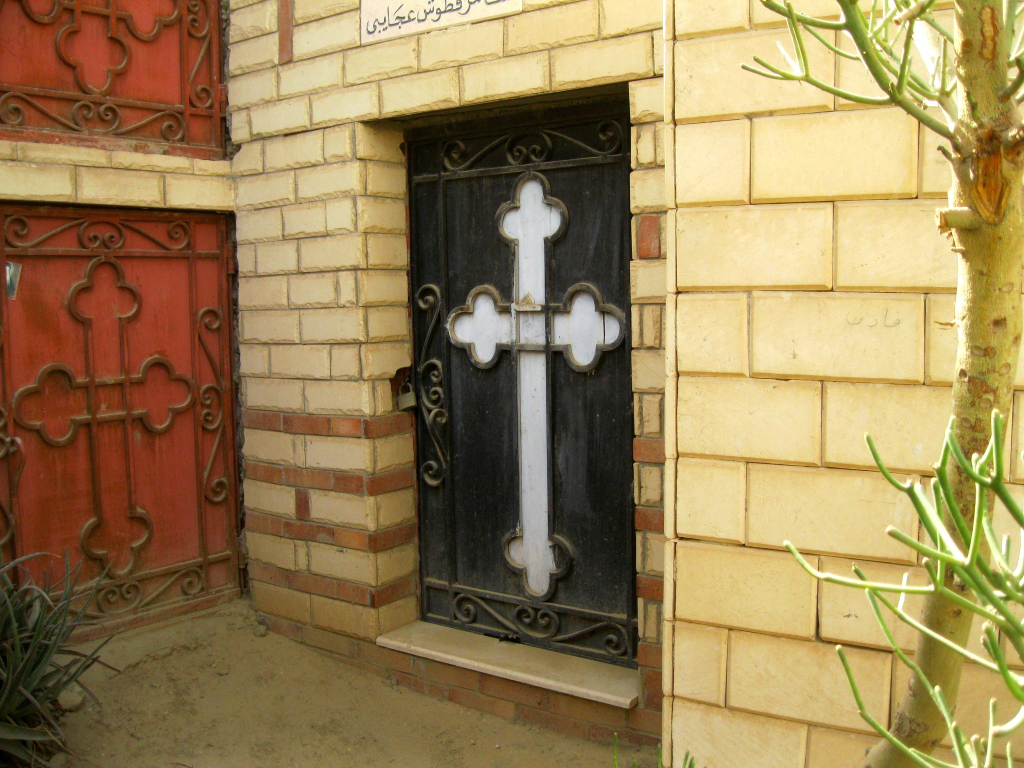
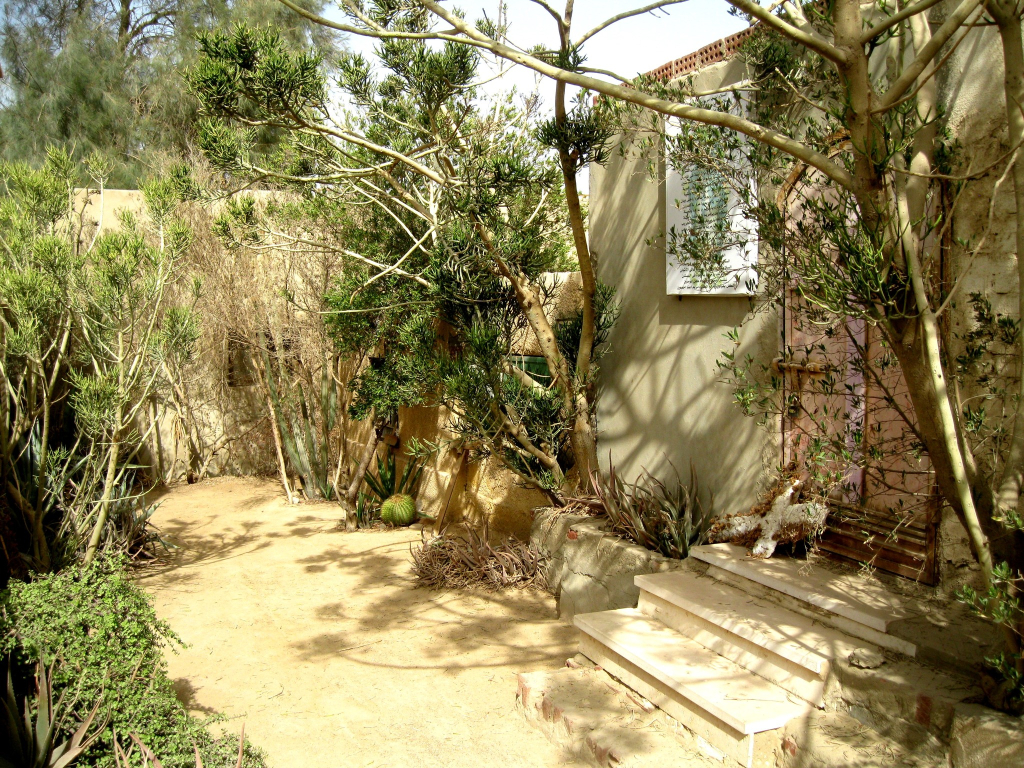
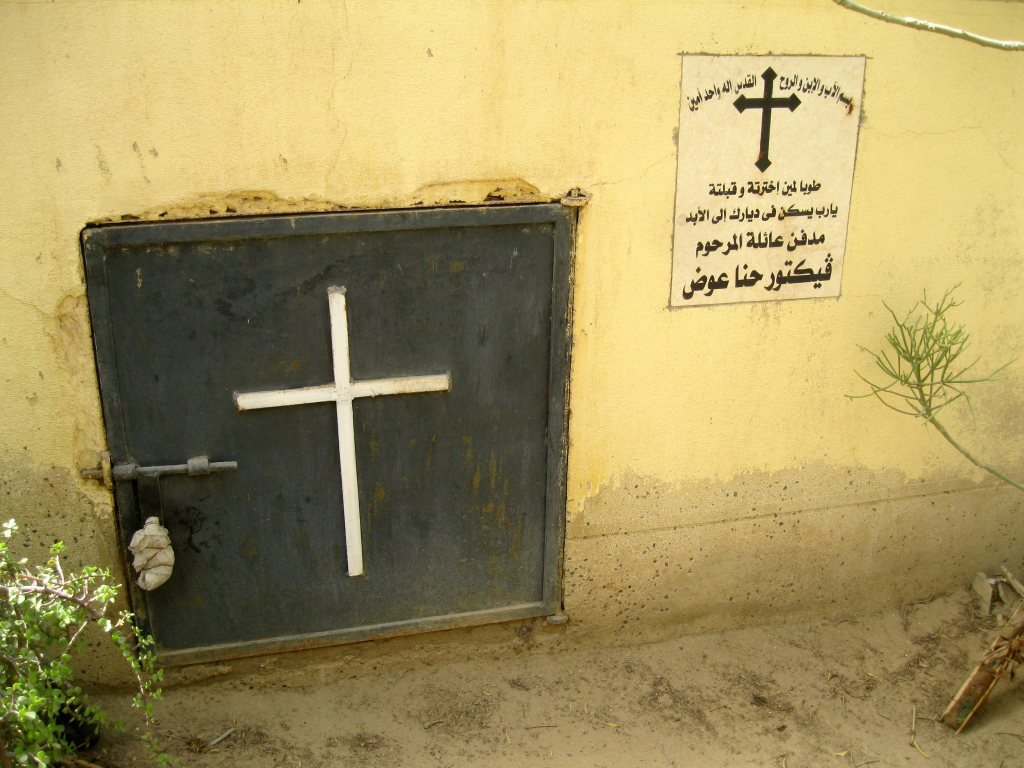
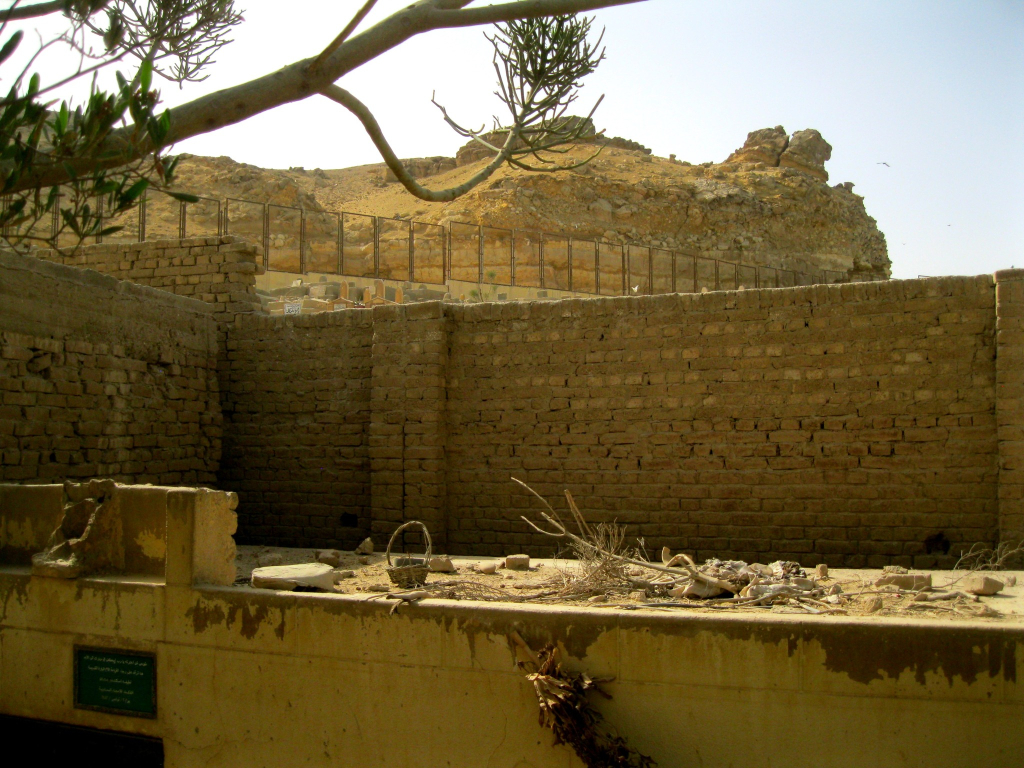
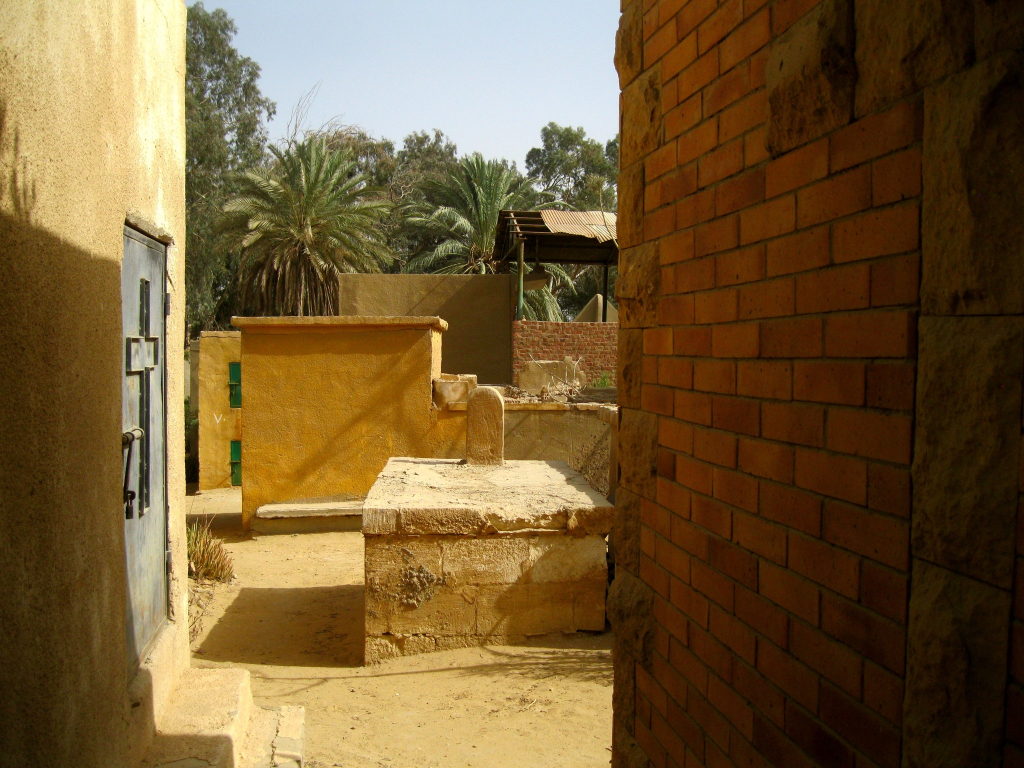
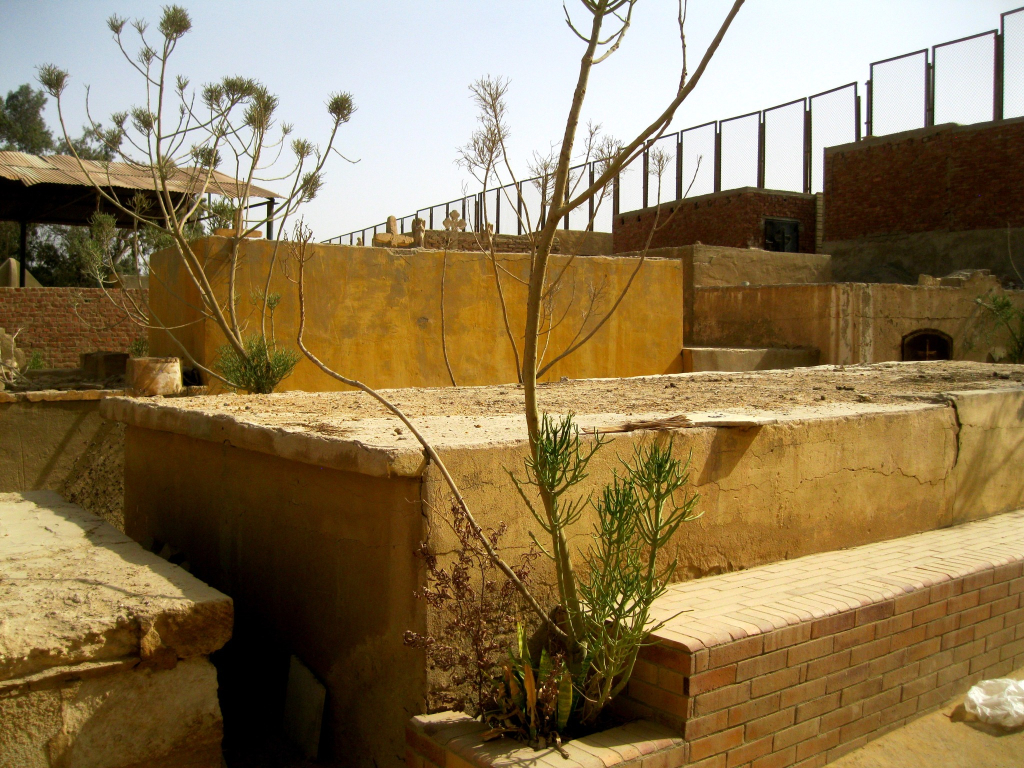
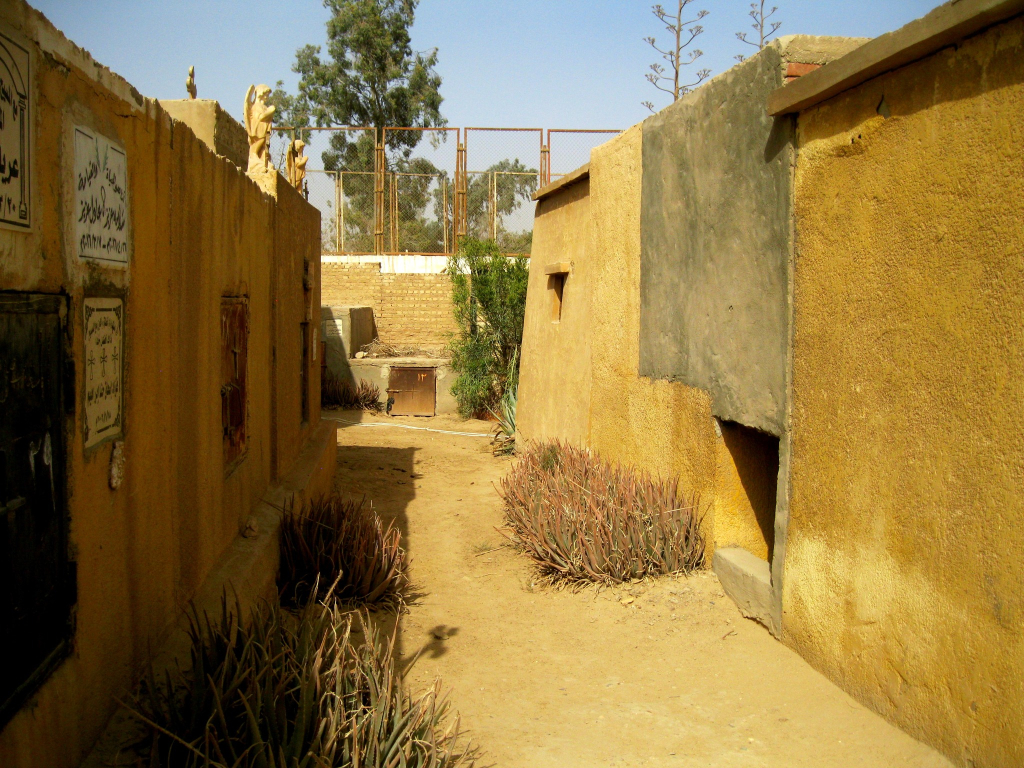
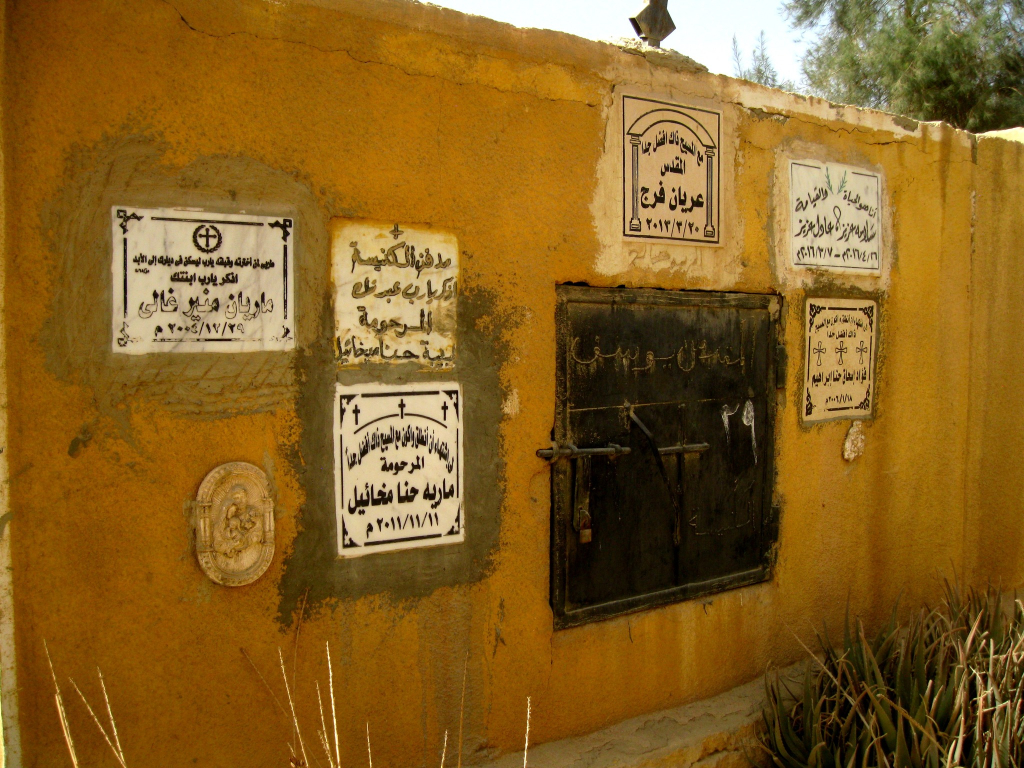
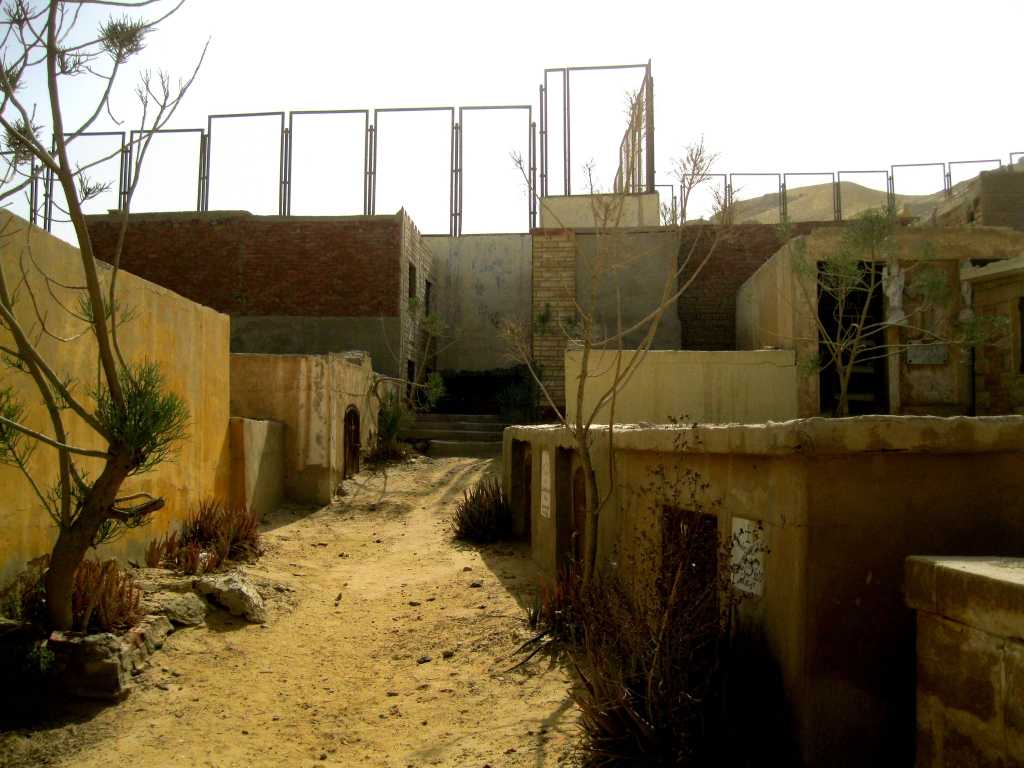
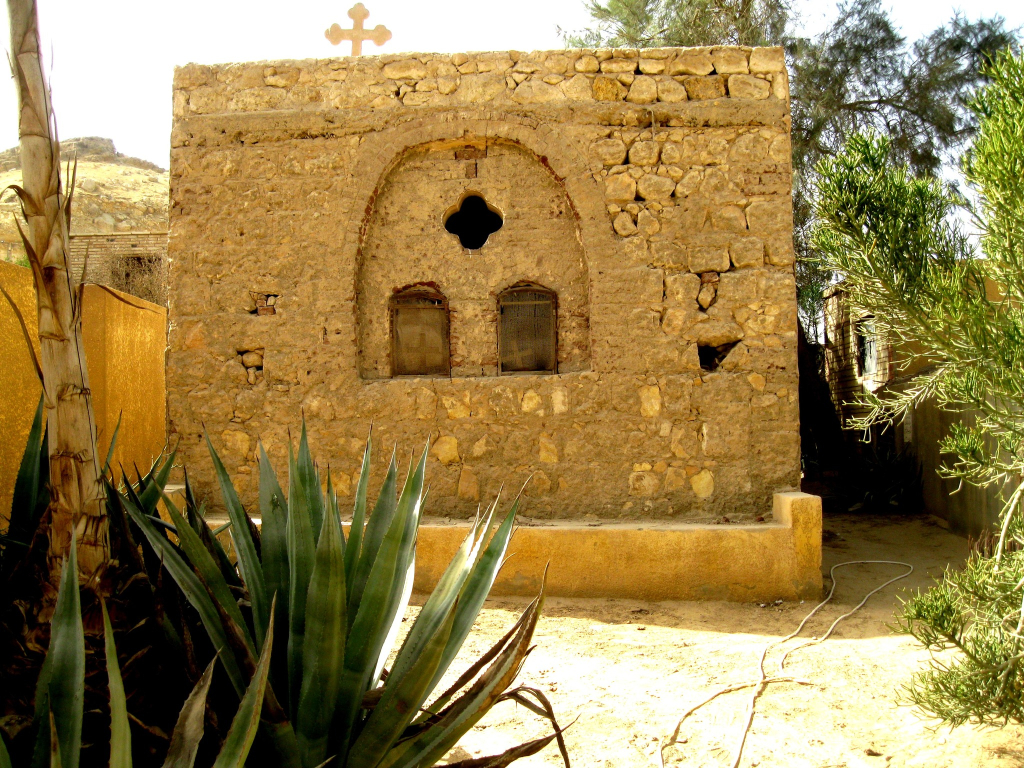
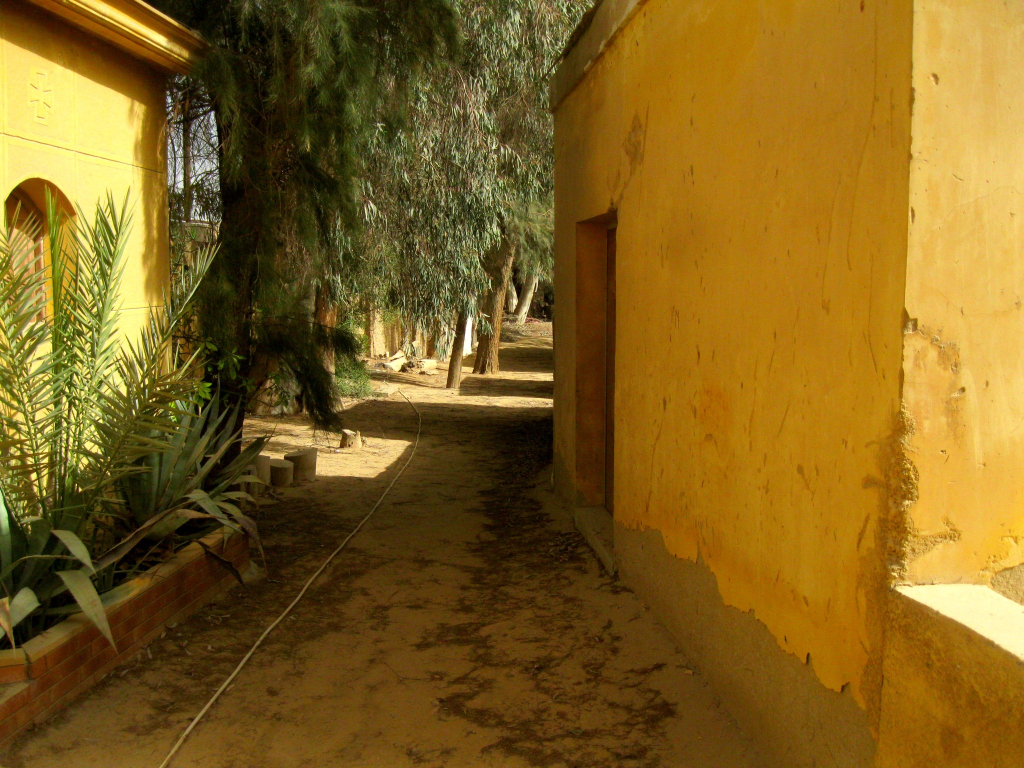
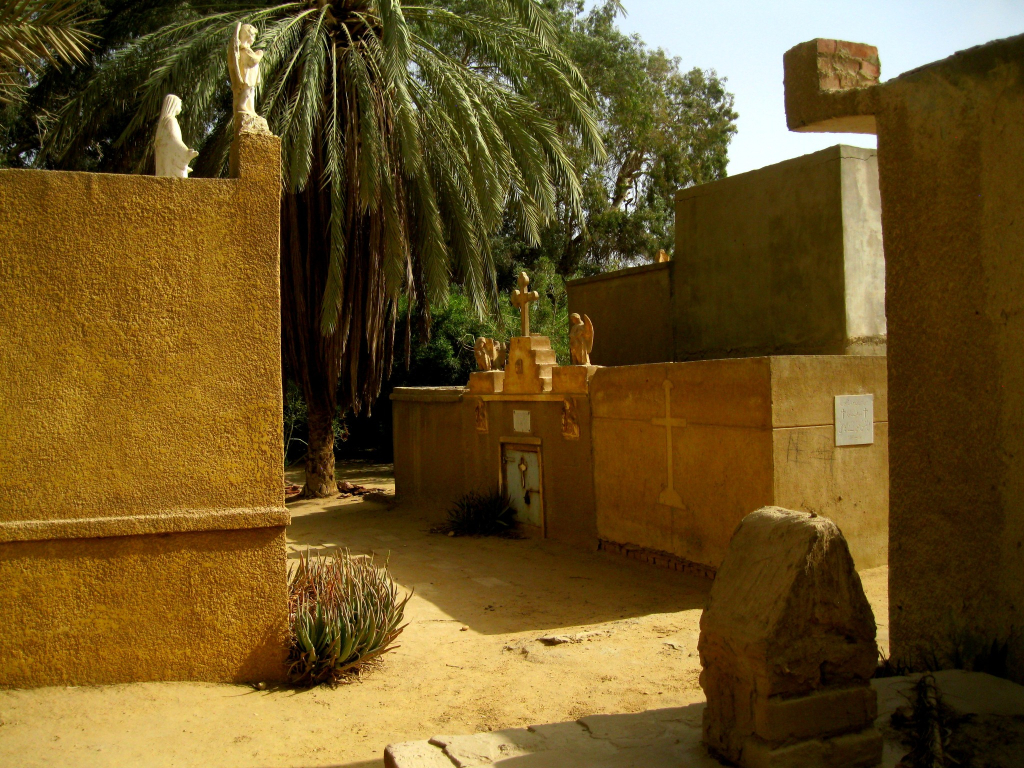
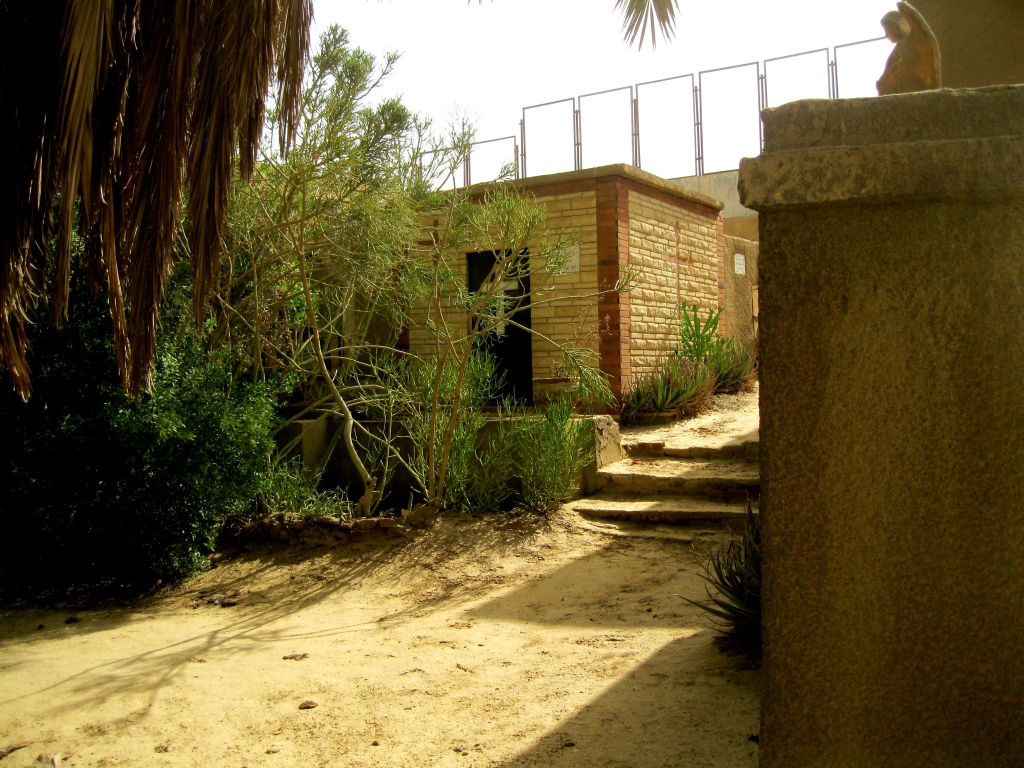
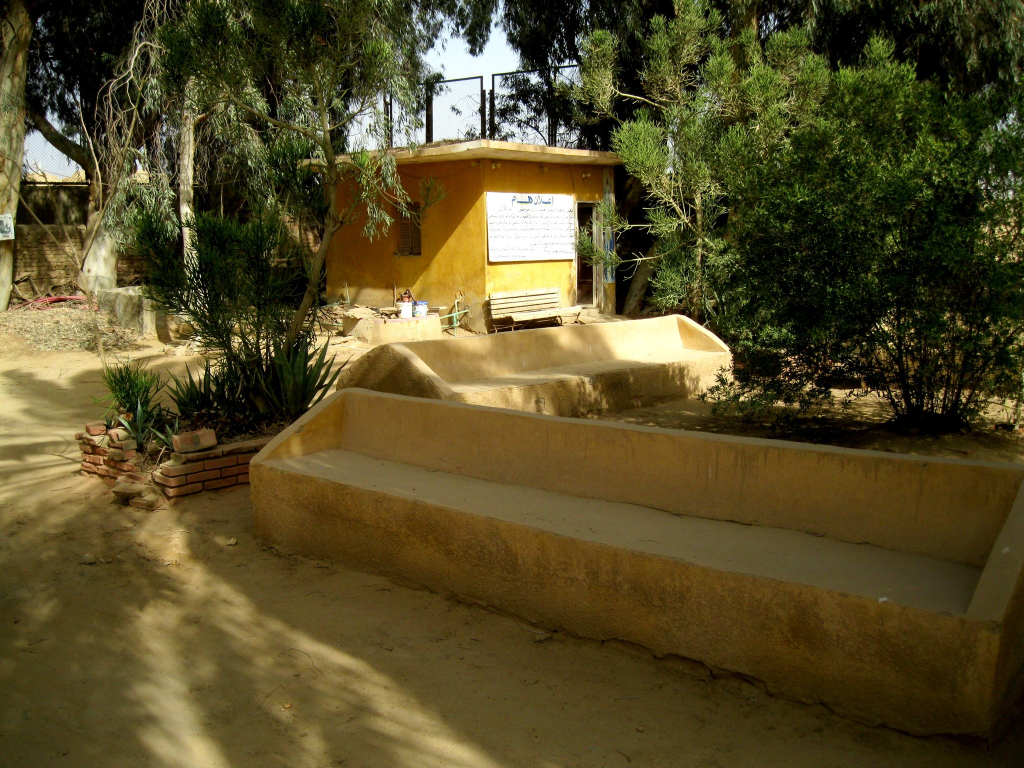
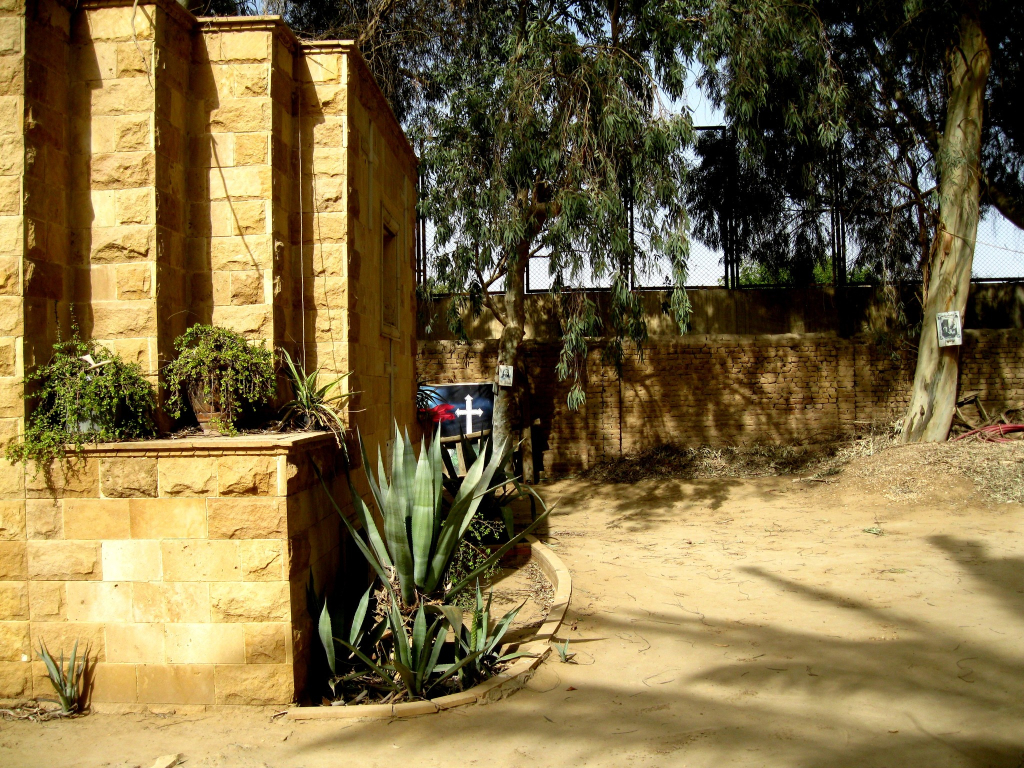
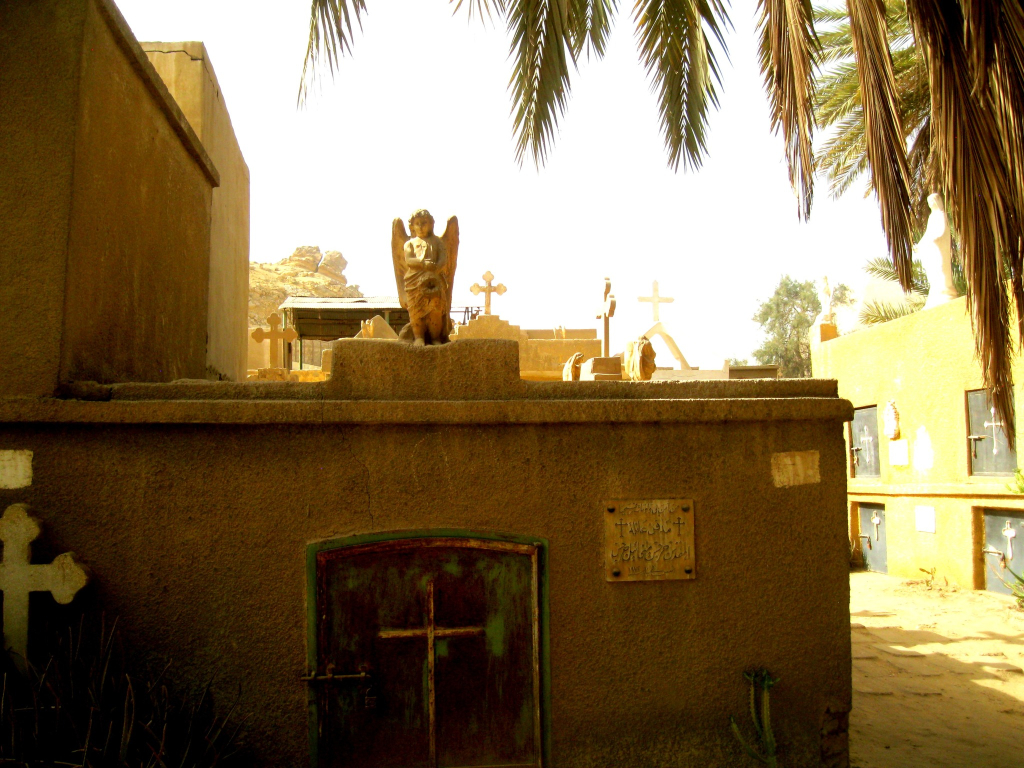
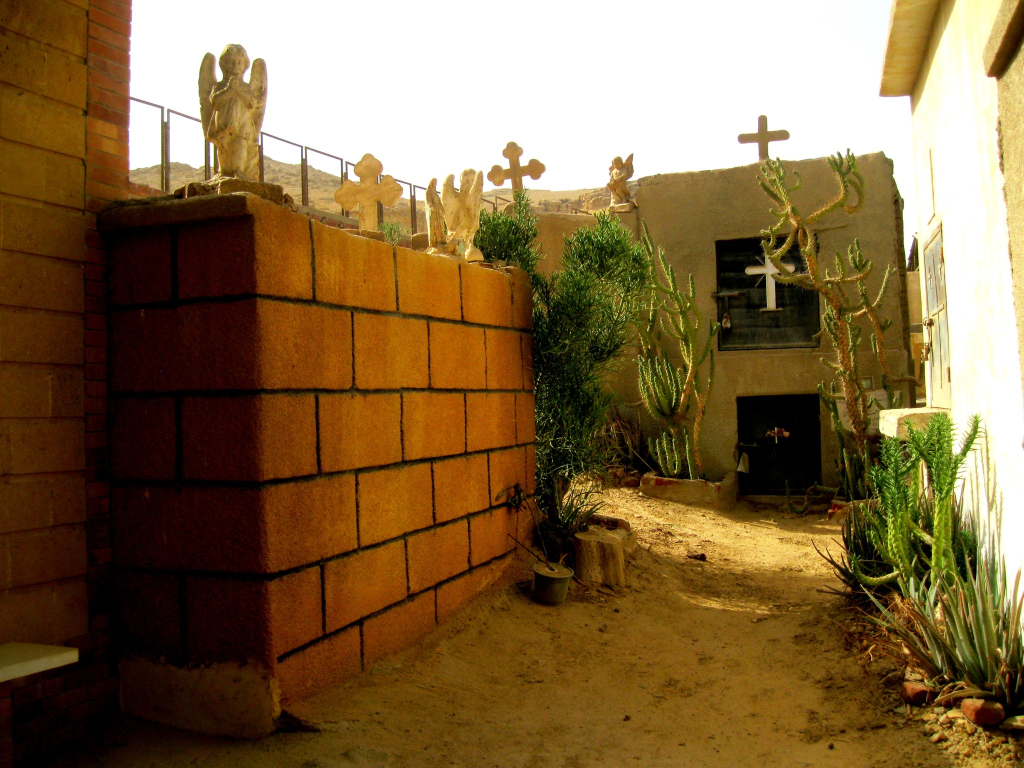
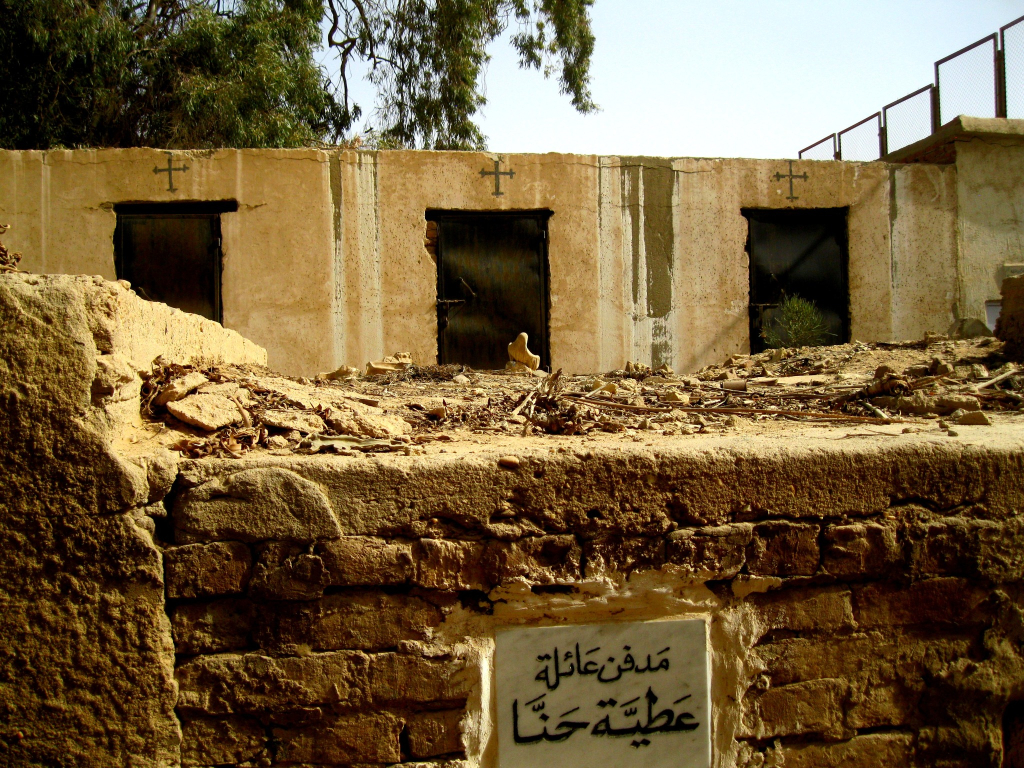
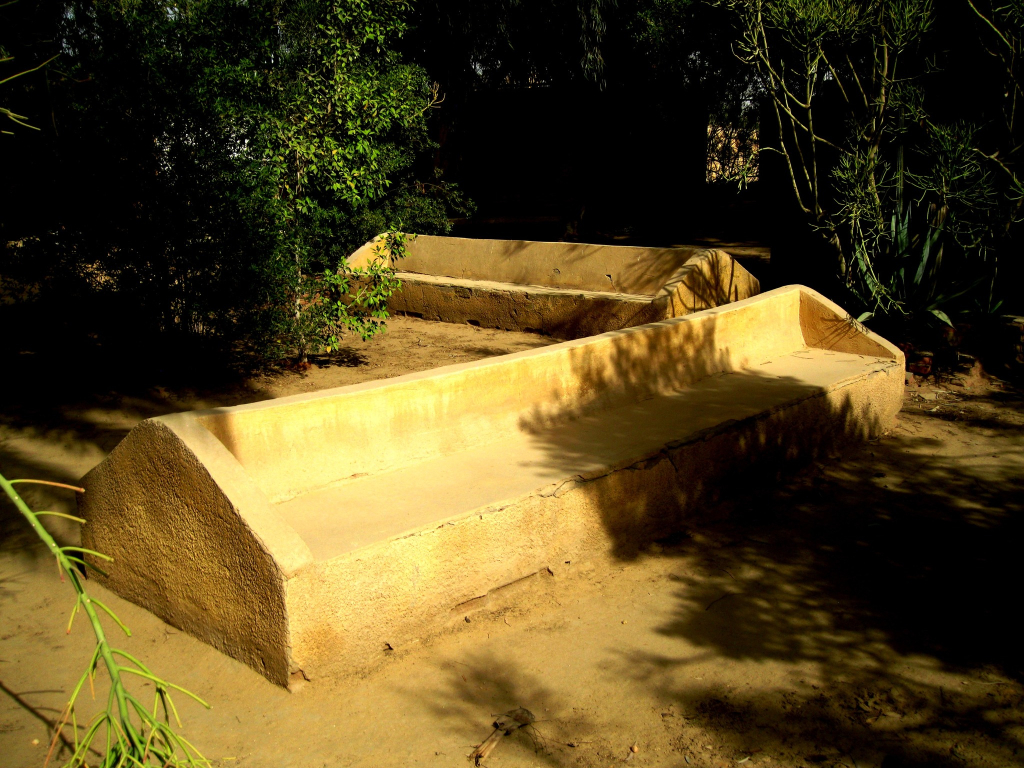
…especially if it is the Muslim cemetery in the shadow of Gebel Ghibli.
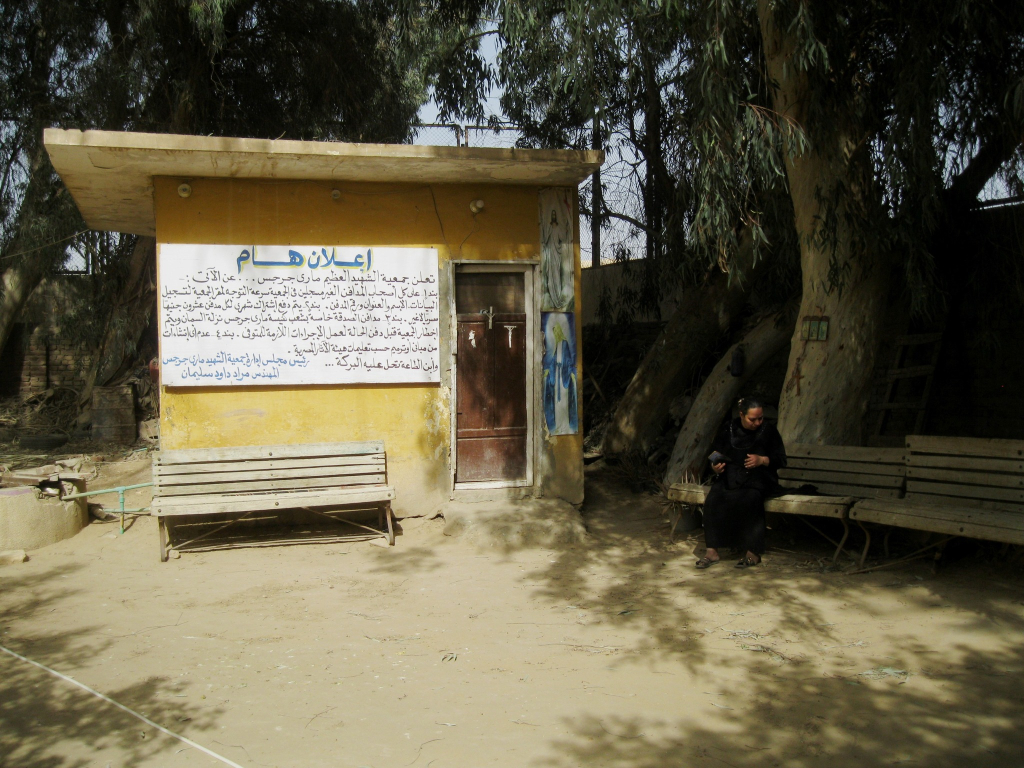
Just a word about access first. It used to be that a non-resident or a relative of a local with a connection to a burial could just walk through with accompaniment to pay their respects. Huh not any more. Under the guise of security (plausible ok) there is now a police post to pluck anyone (chickens) seeking entry. There is still the narrow alley to walk along, but the police insist for any visitor + their local escort have to be in a tok-tok for the few yards to the inner entrance. The tok-tok also has to be paid of course. Good money (baksheesh) has to change hands (oh so covertly) but bloody obvious – to satisfy every open police hand – and even then they are skittish in case they are sussed! They would rather turn someone away than risk their racket being exposed openly – or if they think they can draw the person back for a higher price. They are just low greedy scum-bags! Just another note to say, when I returned the few times from the open plateau, I did leave via that walkway. It meant climbing over the side wall at the cemetery end. I managed to blag my way past the police by brushing them aside on the way out as if one of the Mark Lehner excavators on the nearby Wall of the Crow. The Police wanted to make more of my presence each time, but I had my prepped (lol) neck identity card ready to flash, (on a long neck) which worked every time….
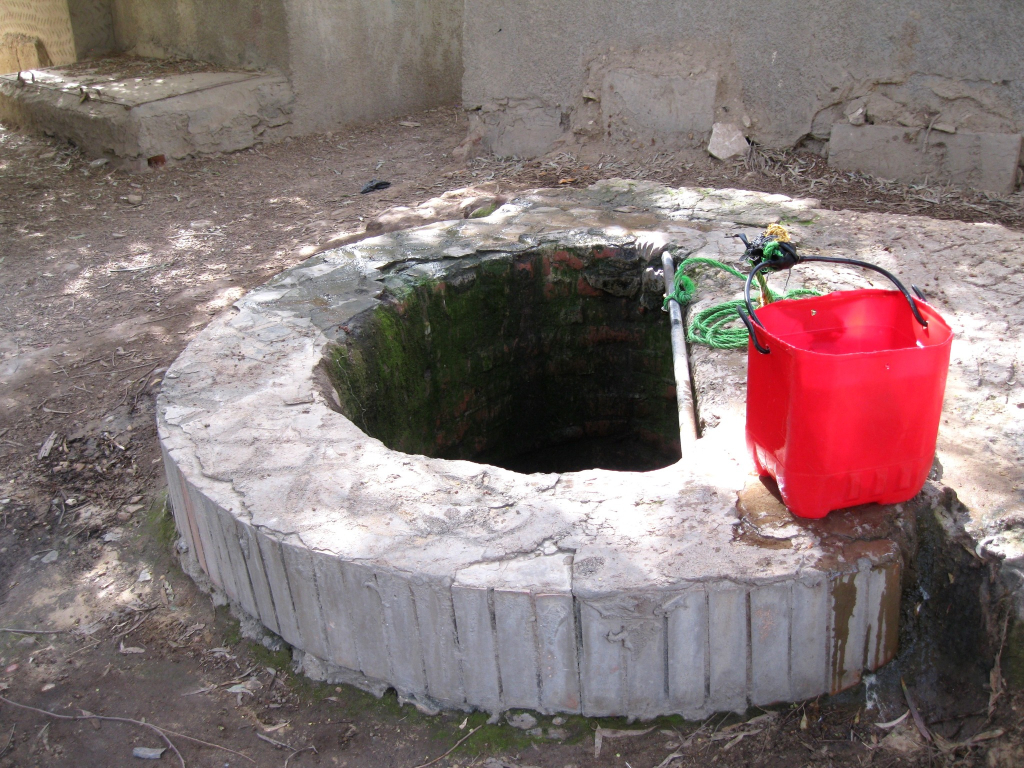
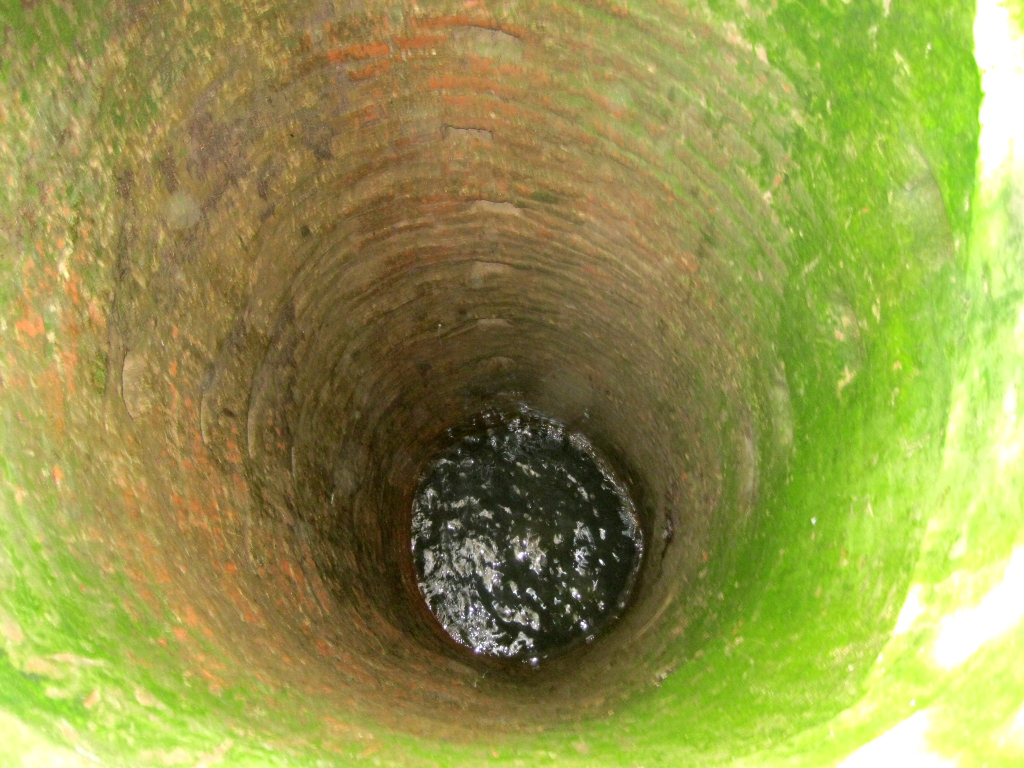
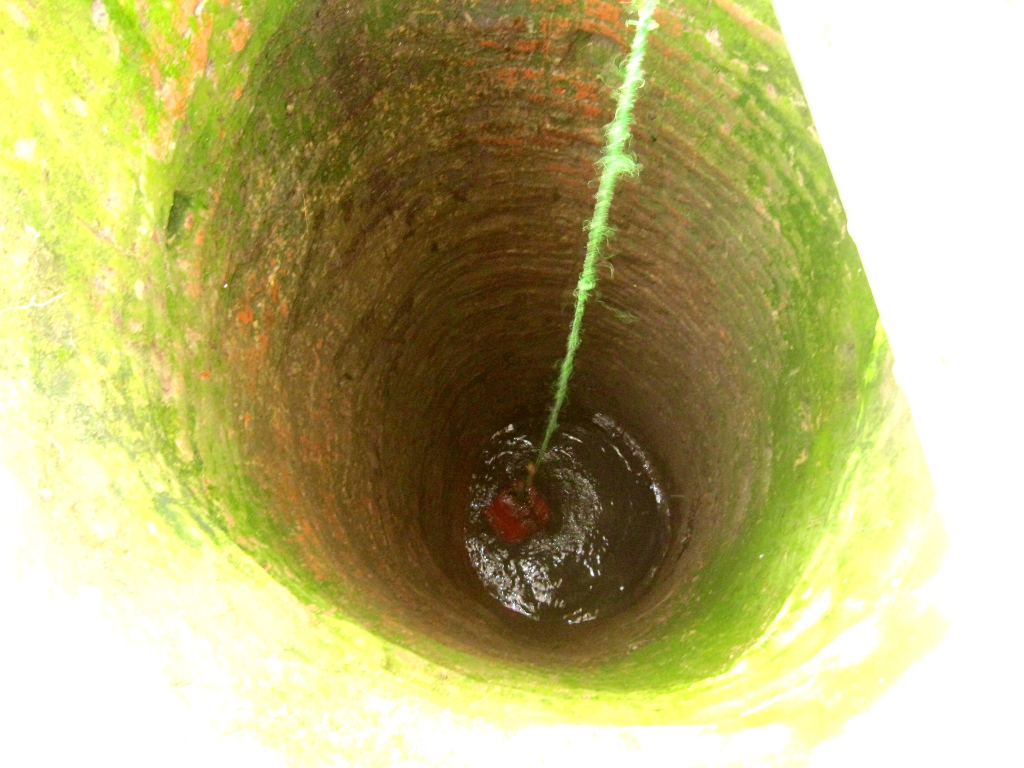
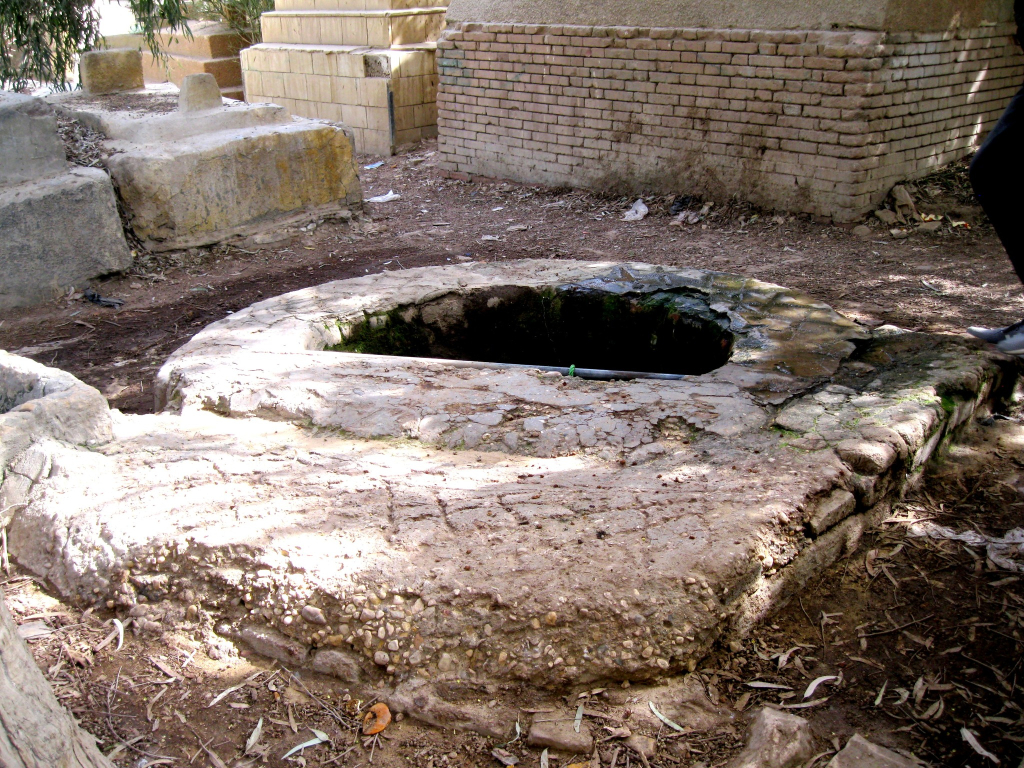
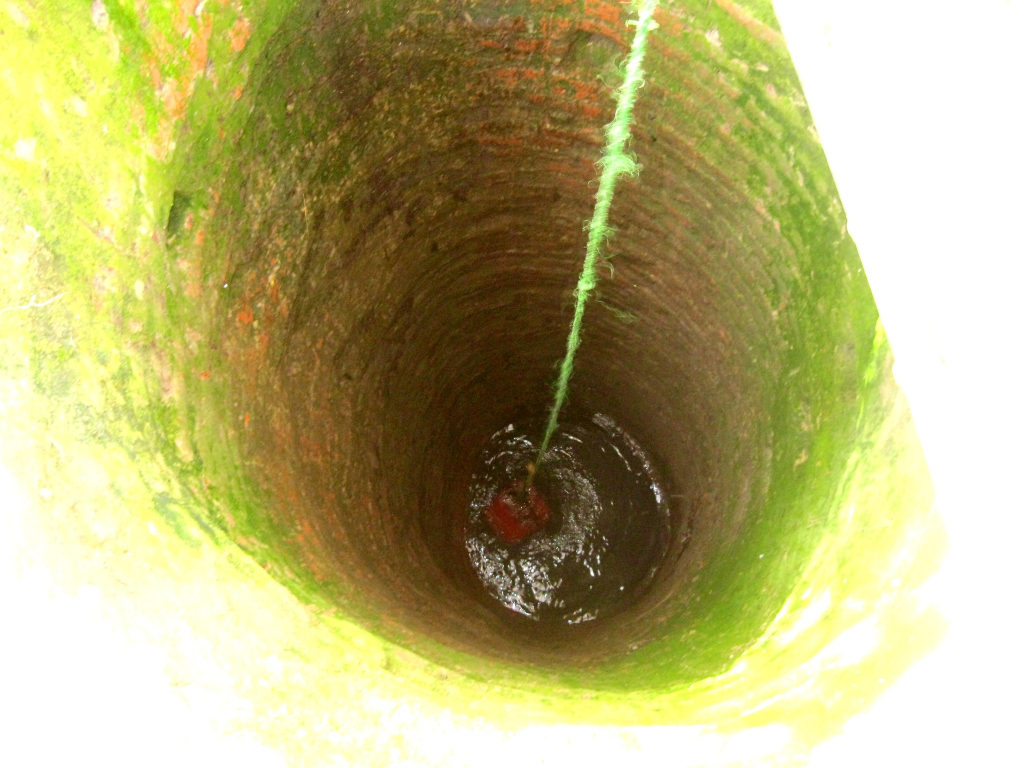
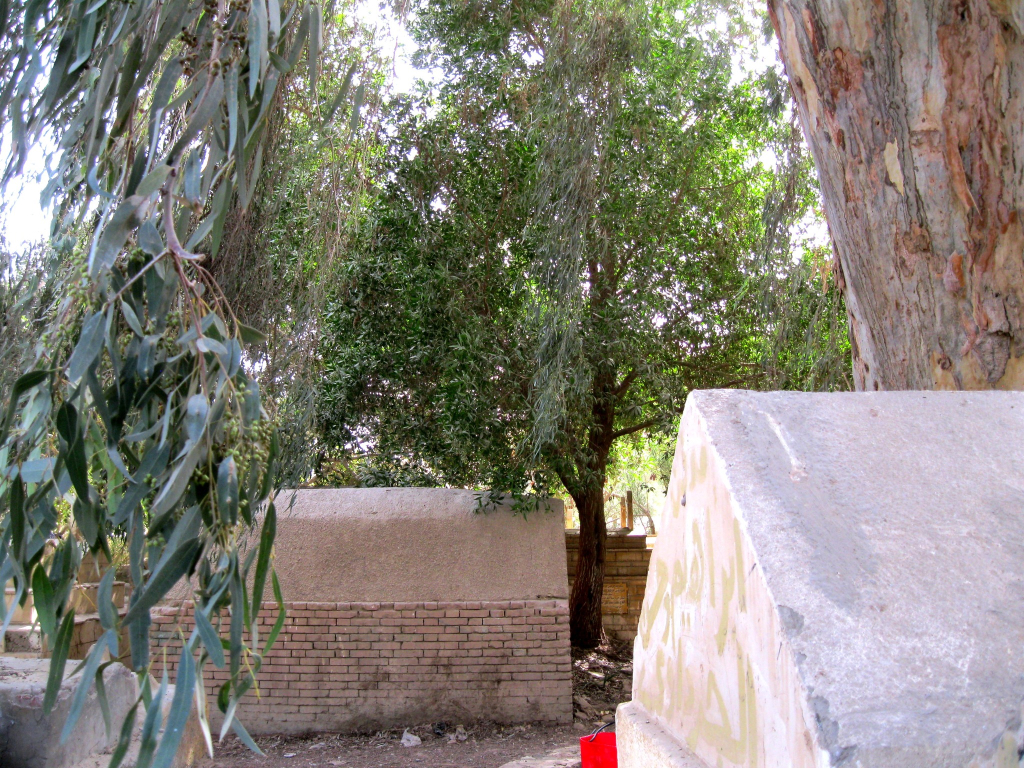
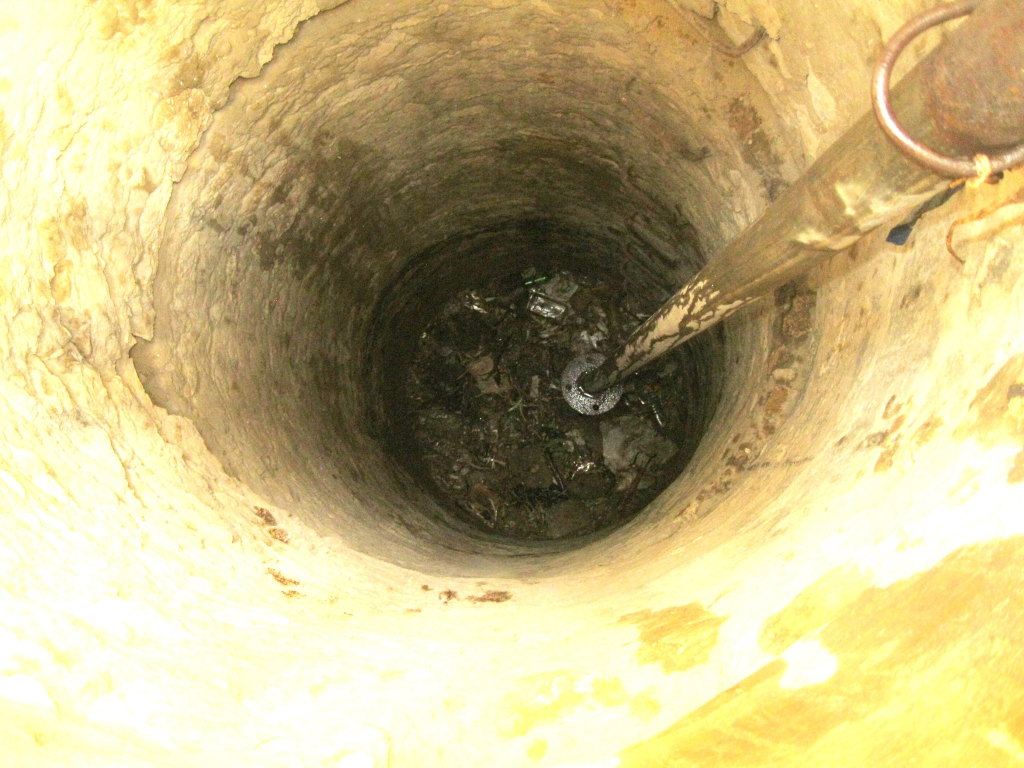
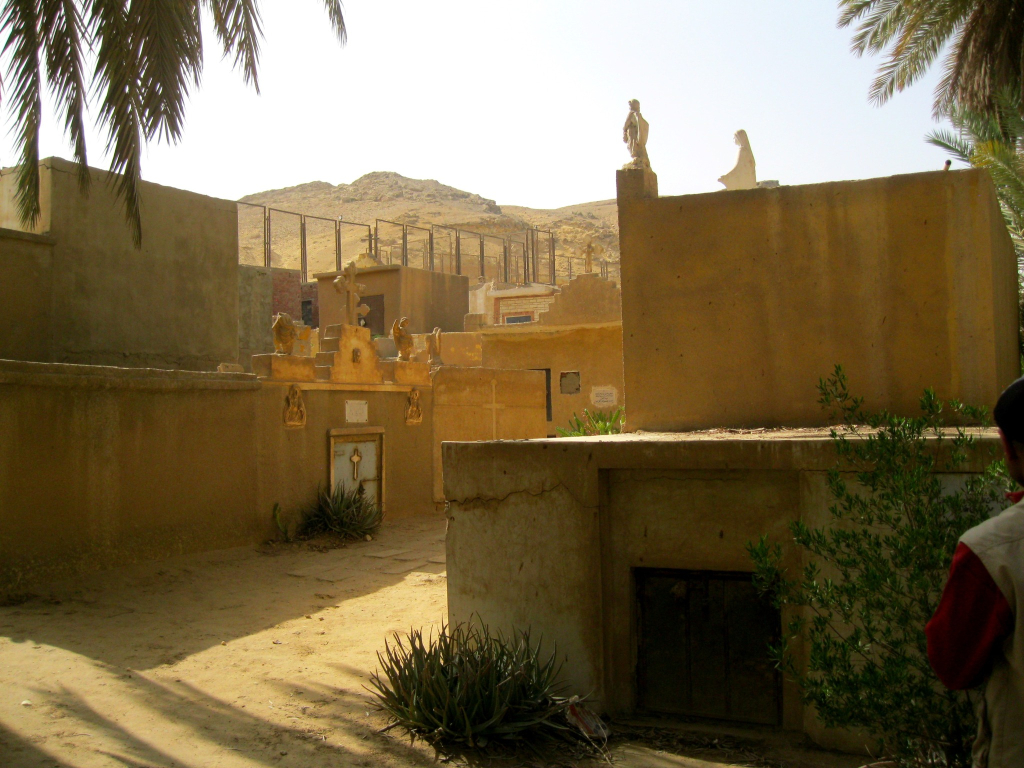
Inside the cemetery it is as if someone flicked a switch. The tranquility is palatable. I made a B-line for Uncle’s spot (Fayad) to say a prayer of memory and respect… Notably in the cemetery are the abundant Sycamore trees :: https://egyptmythology.com/the-sacred-sycamore-a-tree-of…/ The Sacred Sycamore was seen as a portal connecting the human world with the divine. It was believed that the spirits of the deceased could enter the afterlife through the branches of the Sycamore, making it a significant symbol in funerary practices:::: The other main feature to check is the well. I was surprised this time as the water depth was lower. I also observed, there was no marked up-swelling or obvious flow of the water. I had been conducting a bit more research regarding the aquifer source. It seemed anomalous to me the water level in the well did not match the alleged water level in the harbour when the American operation had freshly scalped the sand down to harbour oversight… However the answer to this was flagged way back during all the BS false reporting of the official shaft dig down the interior wall of the rose-quartz harbour basin. The deeper they dug, the more they found the sand/water mix turn to slurry. It was evident that the sun action on the surface coupled with ground pressure enabled a capillary effect which drew moisture to the surface. This gave a false impression of a much higher water table. The well in the cemetery gave closer to a true level. The harbour gave a false level and higher up the plateau, the mystery remained of the much higher water level in the Osiris shaft. Then I was talking about this to a knowledgeable senior local. He didn’t hesitate.
He told me the aquifer occupied more than one level as it flowed along and down through the varying seams of strata. He just said as a matter of fact that the different levels represent the flowing levels down through and across the plateau…. I couldn’t help think of the mysterious mud tunnel at the bottom of the Osiris shaft. I had climbed up into that as far as I could go. It was wet and slimy with mud slip. I was plastered with mud even as I emerged later to the sunlight. However I wondered to myself…. Could it be that simple, where the ancients used relieving tunnels to help regulate the pressured water flow down through significant parts of the plateau? Hmmm!
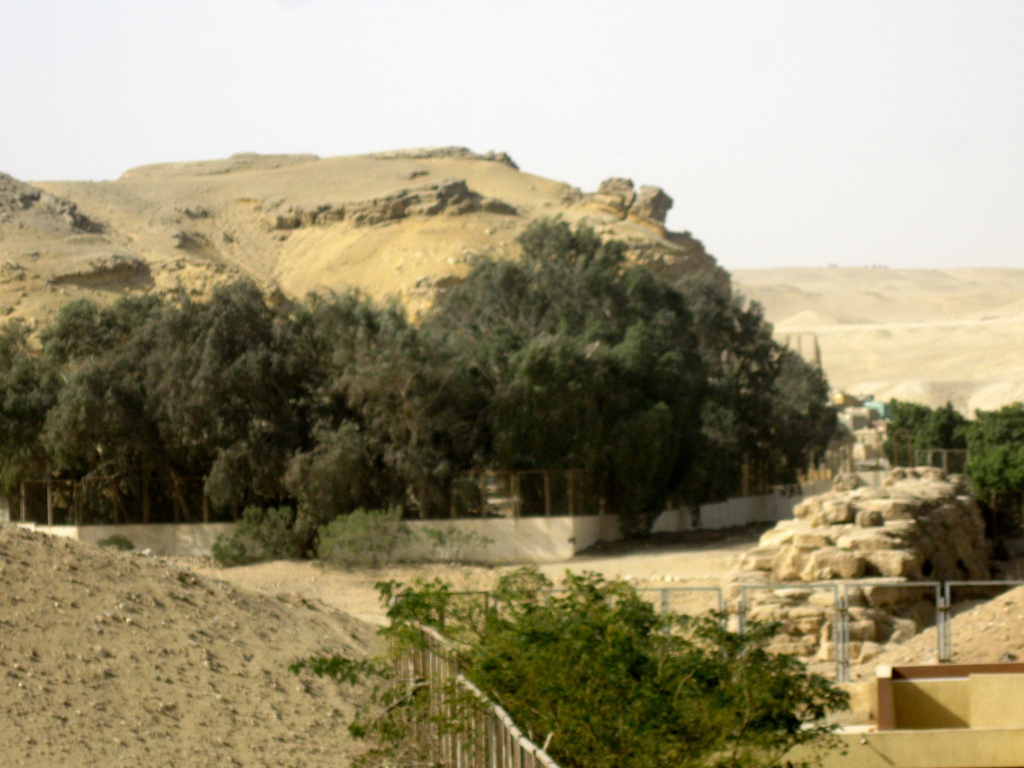
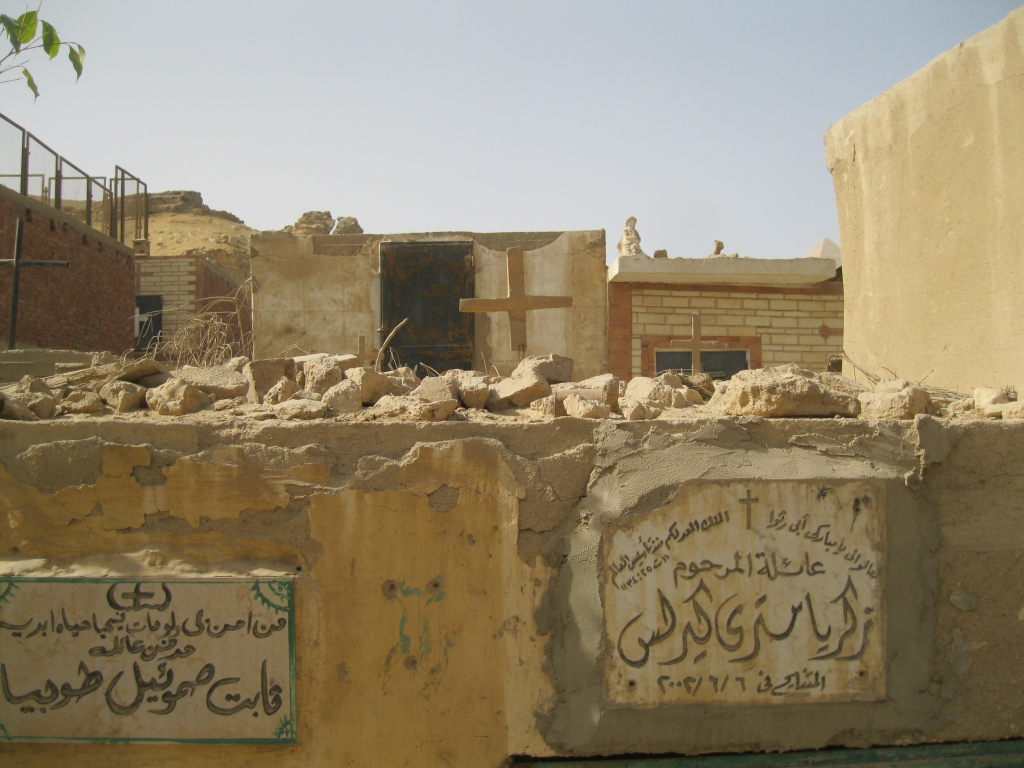
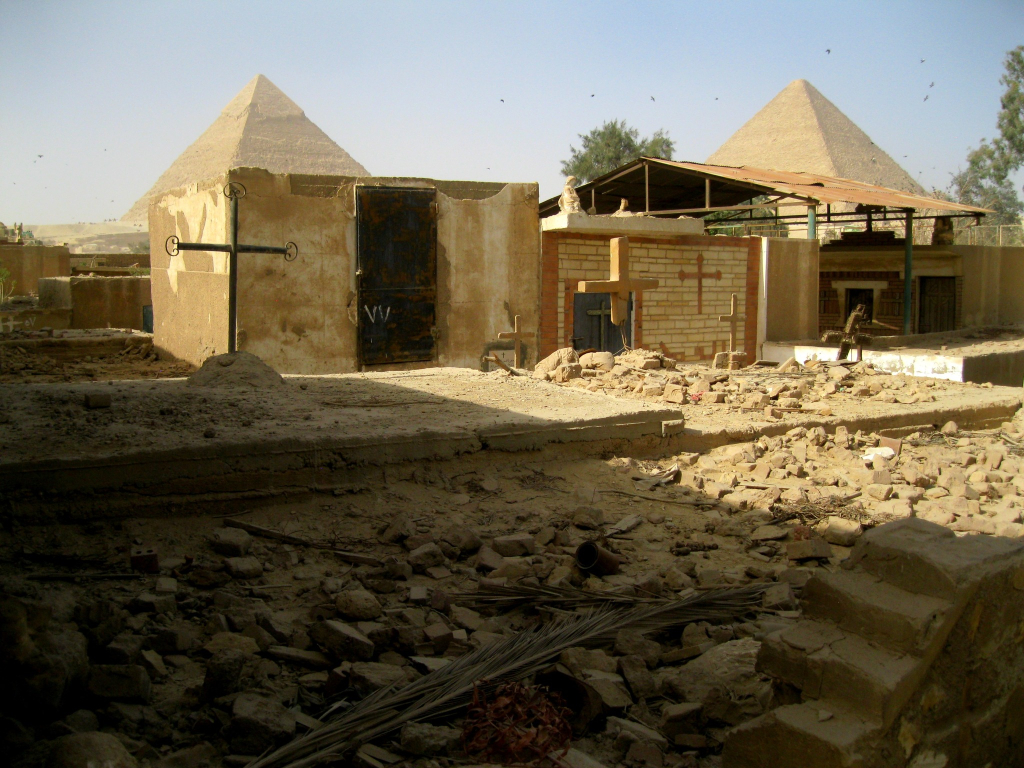
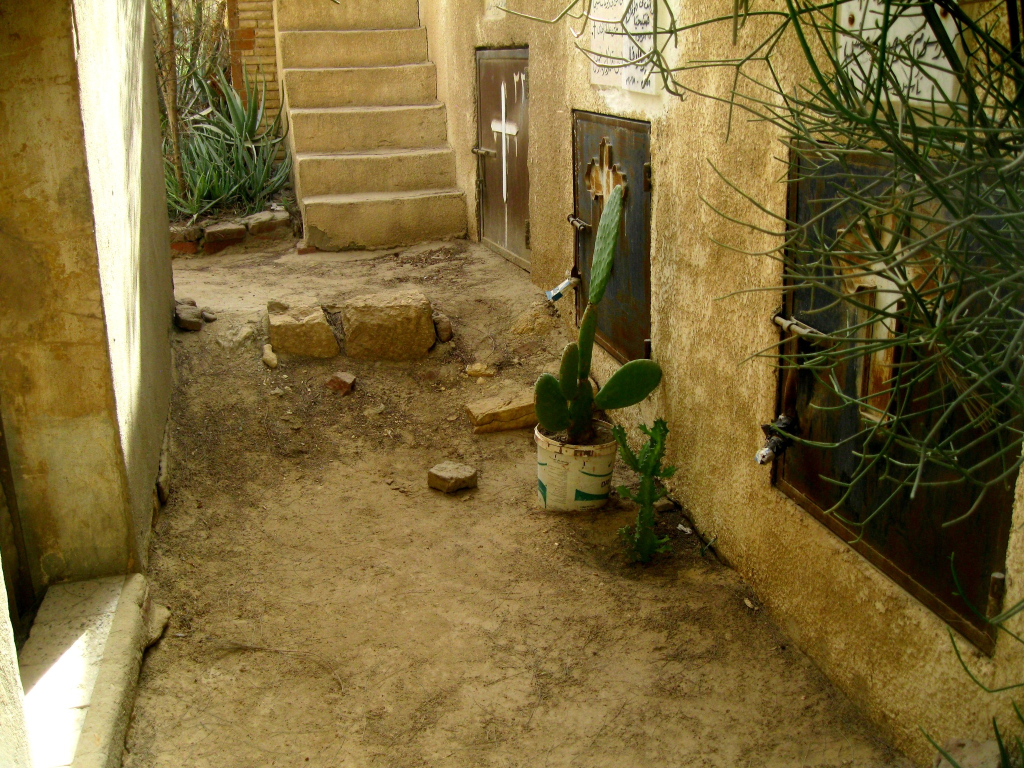
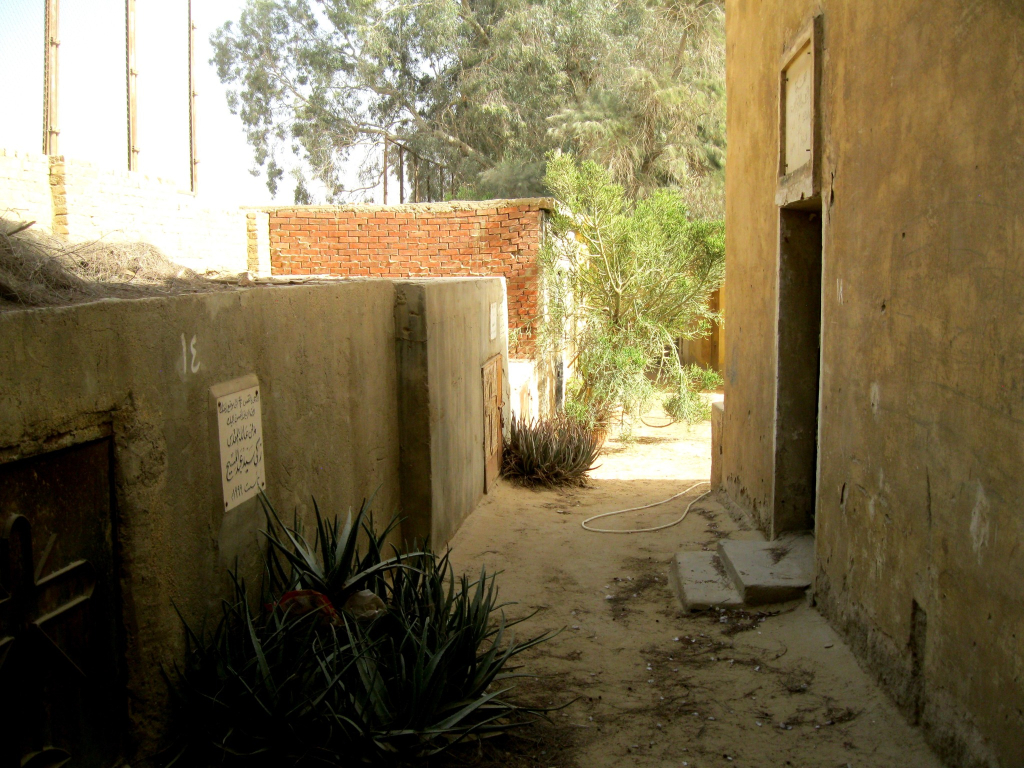
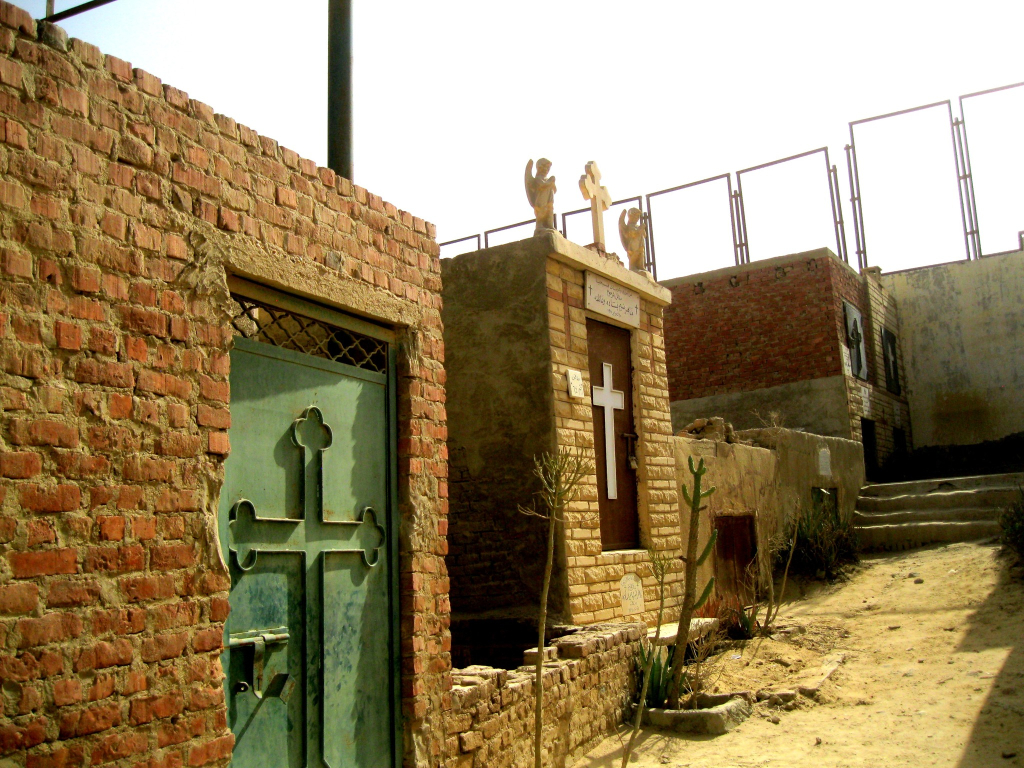
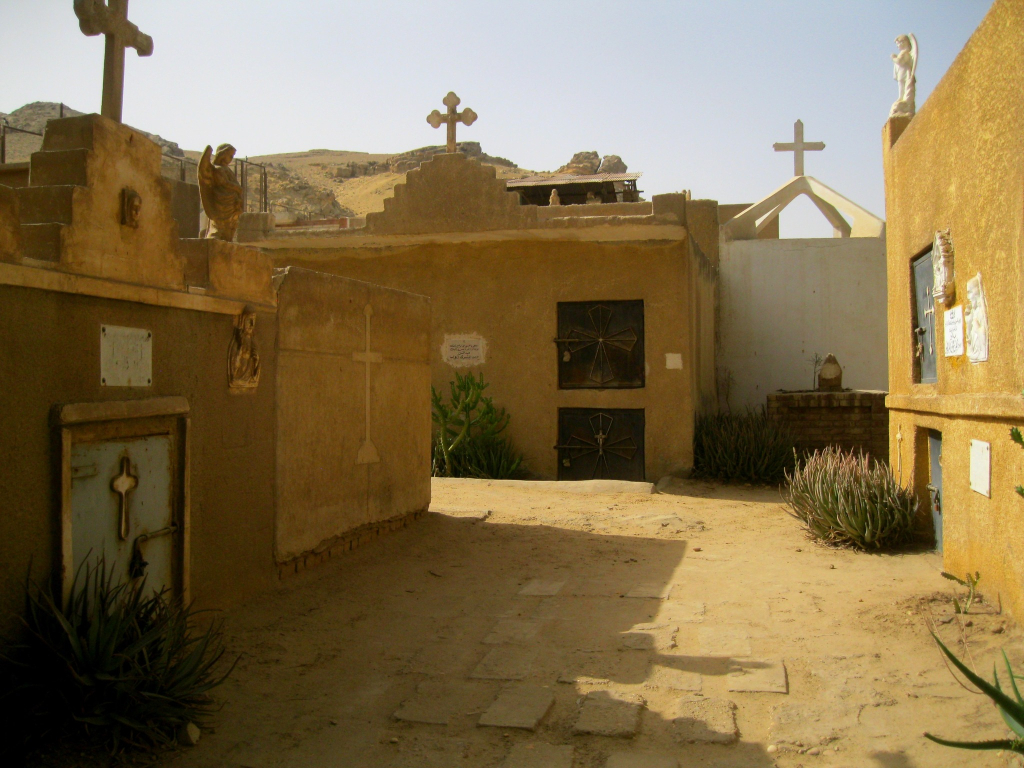
Back in the cemetery I wandered about taking photographs. I couldn’t help reflect that where I showed the imposing sight of the overhanging Gebel Ghibli nose, it may become a record of what once was, as and when the obvious (even from the cemetery) undercut cliff gives way to create a huge collapse of Gebel down on to the cemetery.
https://richardgabriel.uk/wp-content/uploads/2024/05/logo.png00Wayne Stuarthttps://richardgabriel.uk/wp-content/uploads/2024/05/logo.pngWayne Stuart2026-02-16 12:31:592026-02-16 12:32:10What’s In A Cemetery?
Me ~ Now I need to get into the Christian Cemetery.’
Host ~ No way my friend. It is too difficult with the police.
They are afraid.
Me ~ Huh they fear proportional to the money they get in their hand
Host ~ Laugh hehe… true, but it will cost you too much.
Me ~ You have to tell me a way or I will go over the wall again.
Host ~ It is too dangerous Richard. Why you need so much to go there.
Mr ~ I have to confirm the location of a tomb that has a shaft going down to the underground tunnels.
Host ~ Ah ok, I have also heard of this. Ok Richard we will talk later.
I will think about this.
PM …. Richard we can talk. Tomorrow there is a funeral for the Muslim cemetery. It will cost a little, but you will be one of the family with someone else.
Next day I was trussed head to foot in full decrepit aged Egyptian garb limping with a stick to play the part, nearly peeing my pants and moving along with the funeral party in the nearby mosque for prayers before burial.
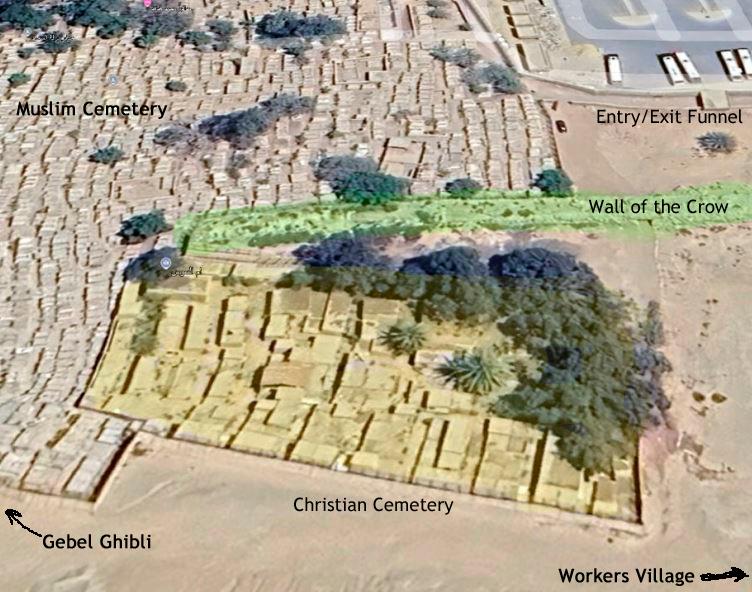
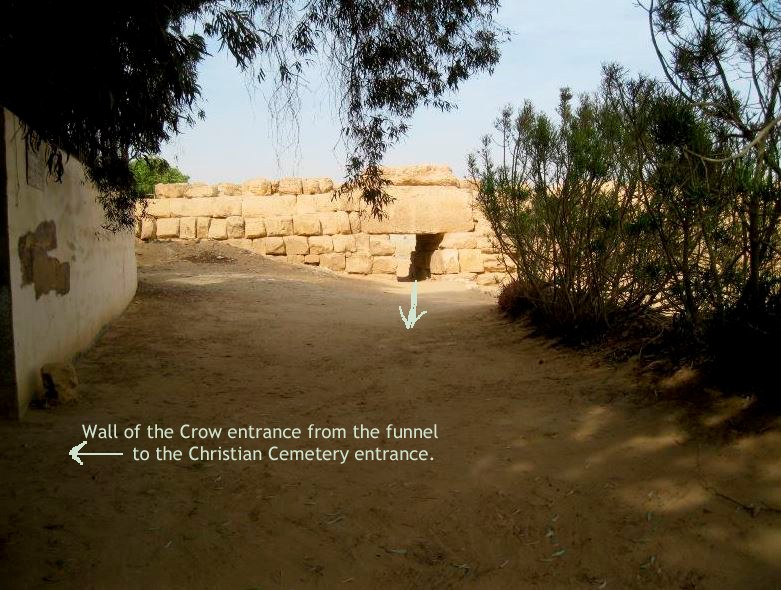
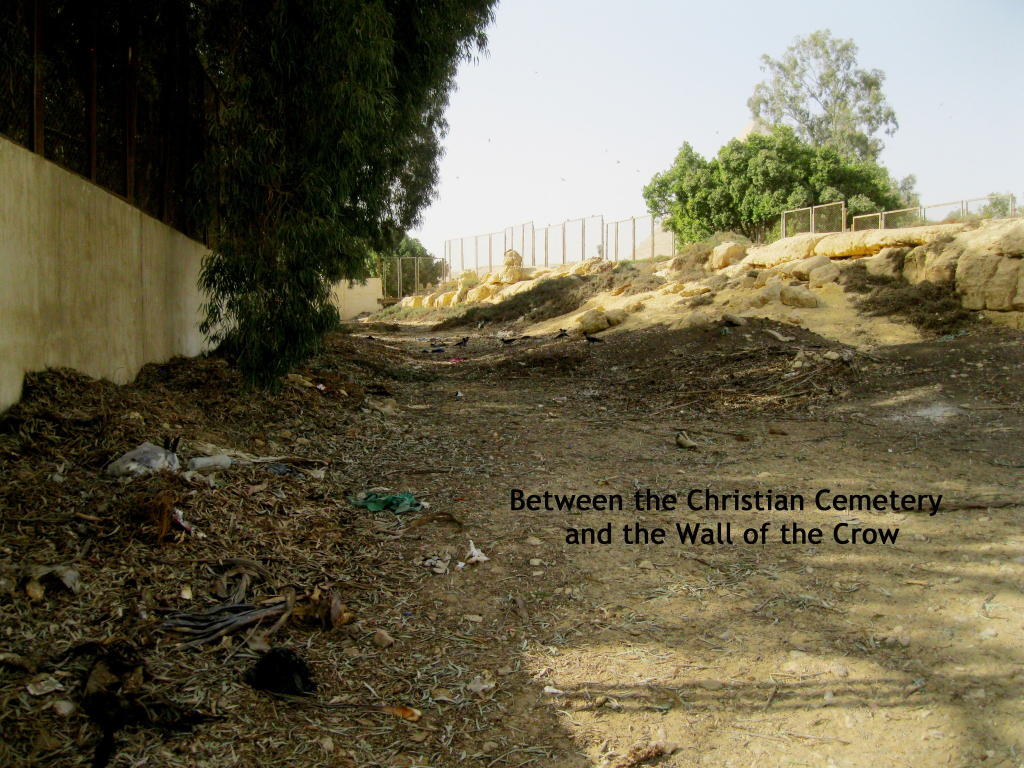
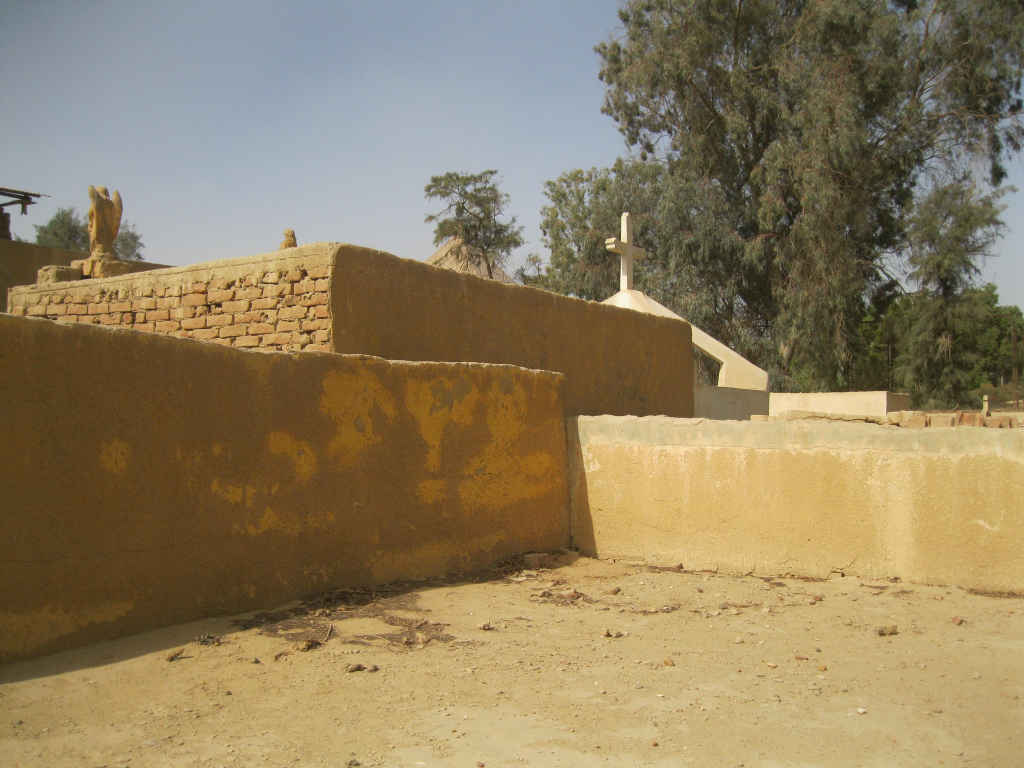
I was steered to be first after the bearers shuffling along the funnel path with the body aloft in front of me…., and then I was jerked to one side as my partner faked a pause for prayer before the Muslim cemetery. The procession filtered into the cemetery and I was jerked to one side again as the big iron gate was opened a few inches for us to slip through and head the few yards to the Wall of the Crow opening. It took just minutes but then we were inside the Christian Cemetery. The hospitality there had been prearranged.
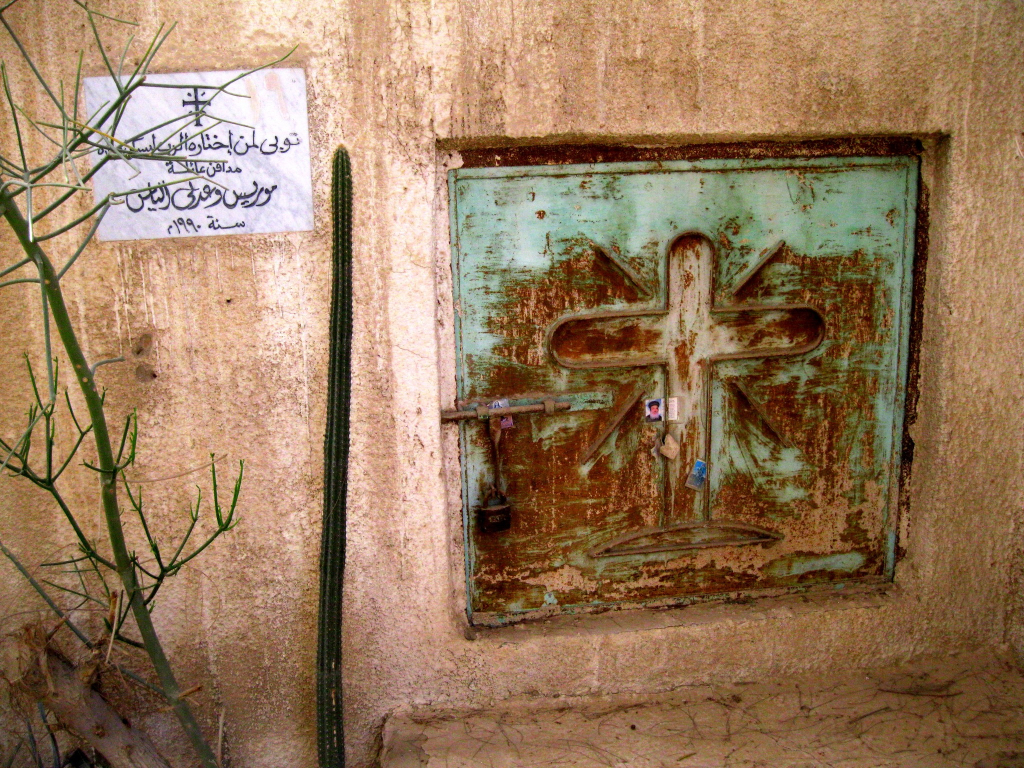
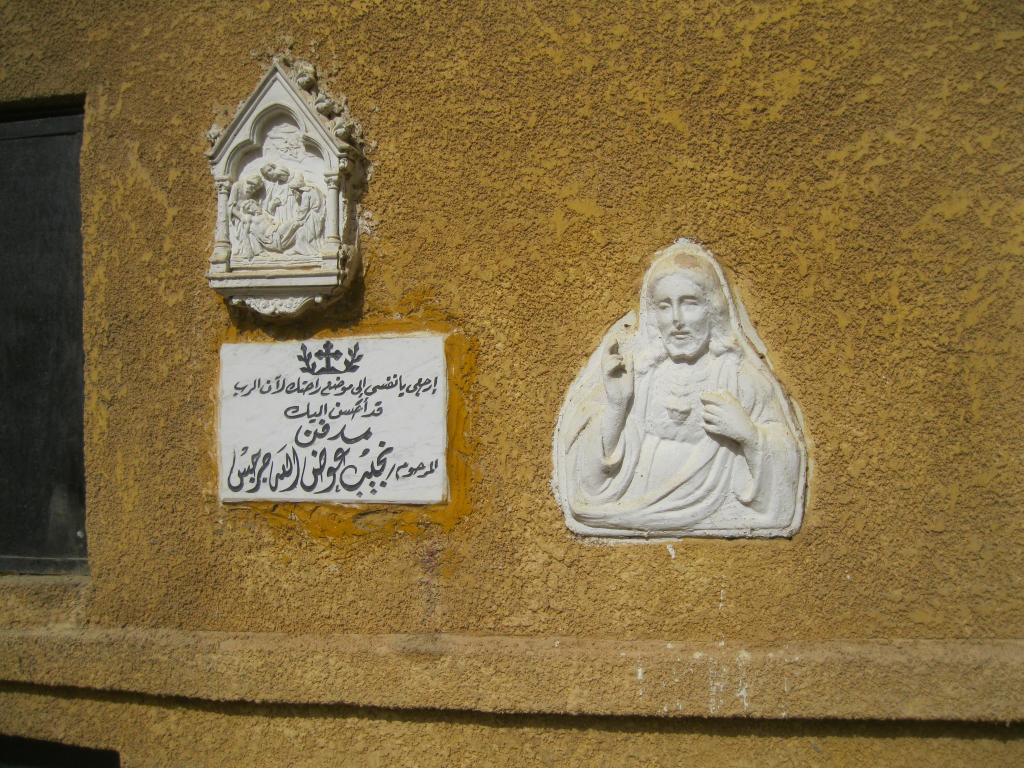
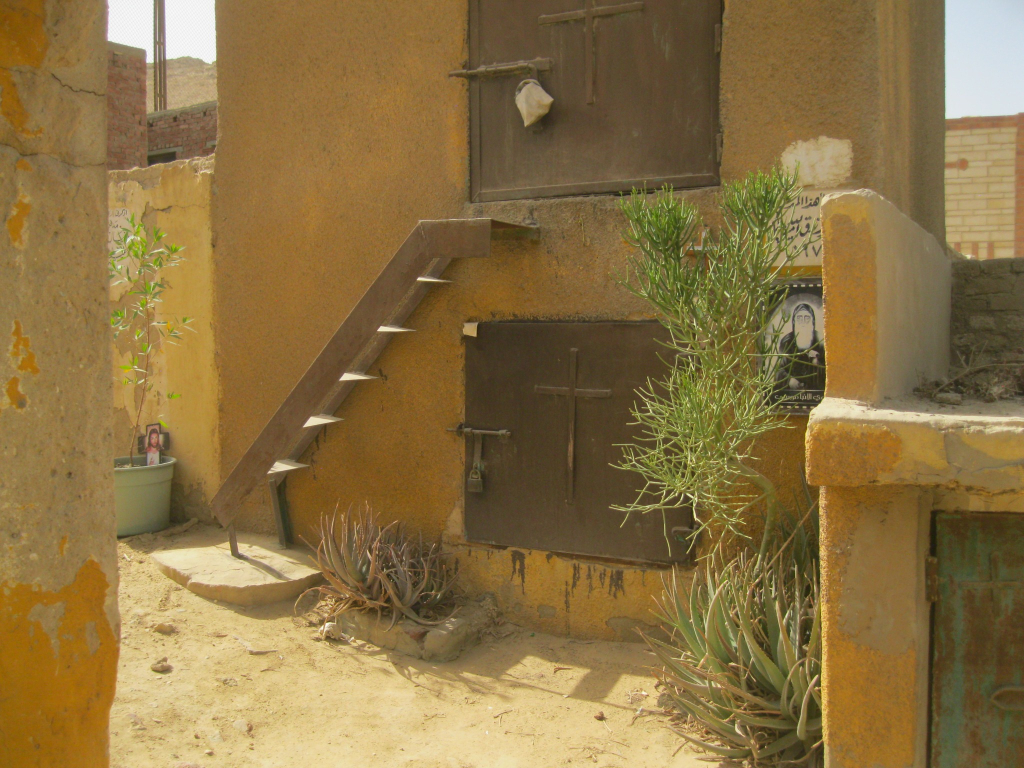
I had a full 20 minutes to explore and photograph. I confirmed my task there and relaxed awhile. There was another legitimacy for the visit as I wanted to search the lasting place for Emir ##### another absolute Christian Egyptian gentleman, a former political attaché, who had helped us so much a couple of decades ago.
We met another dear lady there. She visited daily and very sadly to mourn her child who had died by accident a few weeks previously. We offered her such comfort as we could and swam in the unbelievable serenity and tranquillity of the place, begging in prayer for her comfort too….
Soon however it was perfect time, and with a skip and hop we were back in position outside the iron gate, I was nudged immediately behind the bearers of the now empty coffin because as anticipated we were flanked by other family members who looked our way as if we were invisible.
We were shielded from the additional guard detail at the entrance, who would not have dared to challenge any assumed funeral family members. I said my own final prayer of thanks and blessing for the privilege we had both experienced. My walking partner shook my hand and reminded me of the rarity for what we had just done – but he was otherwise well rewarded so also departed a happy man. The day had definitely matched up to the buzz that was becoming the daily normal there again ….so Lord forgive us!
I still have a bagful of articles to share from my latest trip to Cairo. However I really felt it was time to share a special article with you just about the Animals… The title is no joke :::: Animal Instinct – Life or Death… For all the effort we have poured in to help alleviate the suffering of animals in Cairo, a couple or more decades have seen practically no improvement. The people rely on their animals for meagre earnings which must also pay for animal food… Solutions for betterment will inevitably follow the wealth which will be generated by Disney Giza. At local level it would help if tourists are more discerning to shun badly treated animals…. and if you really want to intervene where there is cruelty, please follow the advice of my article and have the Holy Quran animal rescue quotes ready to shove in their faces. It does shame them to action.
.
Are you one of the millions of tourists who have visited Cairo, Egypt, and the Giza Plateau.
Are you one of the tourists who have enjoyed a Camel or Horse ride into the desert or over the plateau.
How many of you handed money to take a trophy photograph with a horse, camel, goat, dog, or cat.
How many spare an extra thought for the animals when the tourists go home.
How many have visited the hidden parts of the Giza village at the end of the day, when the saddles are removed to reveal the wounds and sores; when some exhausted and beaten animals finally receive water and food! How many of you have witnessed as we have, when a horse was too tired to even respond,
and then dropped dead from the final whipping!
.We have witnessed far worse, and if it stirs a compassion within you, even if you have never been to Egypt, you will read every part of this article… and then vow to help us in any way you can in our efforts to educate for a better way in future… The way it is happening right now is just not good enough!
.
We have been privileged to meet with true stable owners who tend magnificent animals, but even this is let down when the tourists go home and young men and children race these horses at full whip and gallop along the hard main road of the village.
We have been out to restricted desert roads, where owners who are too poor to do otherwise have dumped their dead animals off at the side of the road to rot. We have seen this.
We have studied the dog packs which guard the plateau at night with vigour if anyone unauthorised should try and sneak about there. At best they bring the grateful guards to check the disturbance. At worst they would attack an unlucky intruder.
In the daytime under the baking sun the dogs separate and mingle singly with tourists, hoping for scraps to eat or for water to lap. If they venture too close to the guard posts where the grateful guards linger, their reward is a hurled rock to chase them away. Time is spent otherwise to escape the heat in the daytime and the cold at nightime; or to cope with the parasites and disease which appears to afflict many of them.
We have studied the cats who come and go as they please, wary of contact, scavenging the garbage thrown out to the street, diseased and neglected in many cases, and vieing for territory to fight for, or to hide away for the next litter of kittens.
We have seen the goats kept tied or confined so often, bloated and hungry from a diet of scraps and plastic, biding time until they fulfil their swollen role as generators of another generation, or as temporary meat on the hoof.
We have seen cows tethered too tight to the ground-rings to be able to lift their heads just feet from where their companions are being bloodily sectioned on the butchers slab, themselves too weak from dehydration to even respond to the action nearby.
We have seen the lines of camels after their work on the plateau, waiting forever for some indifferent masters to fetter and secure their heads low to the ground in discomfort, before finally dragging their saddles away. We have seen the bloody saddle sores also, hidden beneath the tourists comfort blankets, but treated with a whip if the animal protests too much.
We have often seen small donkeys laden with massive loads, added to by a big whip-weilding owner sitting astride the load to add to the weight, or often pulling heavy ramshackle carts that would be best pulled by a Shire horse.
We have seen small chicken holding coups where the first task of some owners is to retrieve the pecked-out carcasses of dead chickens or ducks, before throwing in whatever garbage scraps they have saved; or at the market stalls where they are either squashed inside small cages, or tethered as an advertising chicken on top of the cage.
These things and more have spurred us when possible to intervene and bring whatever comfort and compassion we are able to bring, but with a burning resolve to do ‘something’ more permanent to help them all.
Ancient to Modern
How different the world is for animals in Egypt now. Animal worship is long forgotten. Exotic animals of the wild and of the old Egyptian savannah have long gone. The days of the Pharaoh and the hunt will not be repeated. Multiple species are extinct here. Preoccupation out of modern poverty is preoccupied only to use animals for food, transport or in pursuit of tourists.
They are a commodity fallen from the grace of worship and idolatry. The animals have to eat, but their eating is a barrier to profit and gain. The cat has reverted back to a chaser of vermin. The dog has been forced back to the role of scavenging cur. The donkey is required to perform as a vehicle of burden with super powers. The horse and the camel as tourist cash machines which unfortunately have to be fed and tended. What feed can be bought is now fed in ration, and the animals face slow starvation which is already taking place. At night when the saddles are removed… the bones and ribs of the emaciated animals can be seen everywhere.
Husbandry generally is carried out to the barest minimum standard or not at all. Conversation is through the lashing of a whip. Life is the numbness of pain from huge festering sores hidden under tourist saddles. What has gone wrong ? Where has the humanity gone ?
Where has the respect even for the teachings of the Quran gone?
The conventional history books tell us that animal domestication took place in Egypt in time with settlements which emerged along the course of the Nile from 6ooo years ago. However the relationship of people and animals is easier to understand from Islamic record and from the Quran itself.
{{{ In the Quran over 200 verses mention animals and there are 6 chapters named after animals. }}}
We get : The Qur’an applies the word “Muslim” not only to humans but also to animals and the inanimate world.
“The divine will manifests itself in the form of laws both in human society and in the world of nature.”
In Islamic terminology, for example, a bee is a Muslim precisely because it lives and dies obeying the Sharia that God has prescribed for the community of bees, just as a person is a Muslim by virtue of the fact that he or she submits to the revealed Sharia ordained for humans in the Qur’an and Sunnah
The Quran strongly enjoins Muslims to treat animals with compassion and not to abuse them. The Qur’an states that all creation praises God, even if this praise is not expressed in human language.
In verse 6:38, the Qur’an applies the term ummah, generally used to mean “a human religious community”, for genera of animals.
The Encyclopaedia of the Qur’an states that this verse has been “far reaching in its moral and ecological implications.”
{{{ There is not an animal (that lives) on the earth, nor a being that flies on its wings, but (forms part of) communities like you. Nothing have we omitted from the Book, and they (all) shall be gathered to their Lord in the end. }}}
—Qur’an 6:38
Have the Social/Economic changes in Egypt over the last 3000 years been so great – that they may explain the high level of animal abuse throughout Egypt now – and in direct defiance of the Quran ?
From time immemorial people have aspired to the best qualities seen in animal behaviour. In ancient times when life was simpler, it would have been much easier to transfer these observations into the everyday world.
Even in the stars the symbolic status of animals is immortalised in the stellar constellations. Modern history fixes animal descriptions in the constellations from about 3000 years ago and they were clearly defined by the Greek scientist Ptolemy in 150AD.
However this definition misses other important evidence because there was another constellation which was missed or ignored. ‘Ophiuchus’ appears due to Precession, every 10.500 years and is visible again in time for the passing out of 2012. Ophiuchus is the Serpent bearer and there are many connotations within Egyptian life from this Serpent.
It was symbolic more of Agathodaimon, who was the good spirit in the form of a serpent, uniting the higher domains with the netherworld of the Duat.
Throughout the history of modern Egypt animals have conveyed status. It is obvious that owning high numbers of domesticated animals reflected a person’s wealth and estate. Animals were bred and owned for their inherent high qualities, or were collected for their wild exotic status; and in many instances wild animals were tamed sufficiently for handling as a showing of ultimate status. Animals were elevated within society. They were treated well and respected, and even revered or worshipped as symbolic gods. Many of these symbolisms and their important implications are dealt with in our .info site.
It is said that the Prophet Muhammad cut the sleeve of his coat rather than disturb his sleeping pet cat Muezza, and that the stripes in its fur were from his hand stroking it.
Medieval donations were elicited from followers of Sultan Baybars 1260/1277AD to maintain a garden for destitute stray cats near the Mosque. Heraldic emblems of the Baybars used even on coins were the prancing lion or the panther.
Small Egyptian amulets representing cats may date from as early as 2300 B.C.E. The oldest picture of a cat was found in the tomb of Baket III. It dates from 1950 B.C.E. and shows a cat confronting a rat
There is a cat known as the African wild cat (Felis silvestris libyca)-one of the closest wild relatives of the modern cat. It is larger than the average domesticated cat of today. The feline’s tawny, yellow-gray fur, long tapering tail and striped markings, affording it ideal camouflage among the rocks and sand of the desert. This cat is known as a predator-a hunter of small game-rather than a scavenger. The other cat native to Egypt is the swamp or jungle cat-(Felis chaus), but it is the wild cat which is believed to have been the cat to “domesticate the Egyptians.”
In the villages, the greatest danger to Egyptian households were the numerous poisonous snakes, rats and mice which attacked food supplies in the home and the village granaries. The wild cat, it is assumed, strayed into the villages and hunted down the vermin, keeping them at bay. It’s easy to imagine the grateful Egyptians leaving out scraps of food to encourage the wild cats on their vigils.
From a time of 3000 years ago and earlier, we know the camel was introduced as a working animal from North Africa. A little later than the Camel, the horse was introduced.
The Hippopotamus by then was on its countdown to extinction in Egypt in less than 2000 years, but from around 700BC and for over a thousand years it was believed that animals could communicate with the gods and were their earthly representatives.
The following list describes the top ten Egyptian Animal deities.
Sobek – a huge crocodile god, sometimes shown as a man with a crocodile’s head – was a deity not to be trifled with. He was a huge, fierce beast associated with the idea of the sun going down to sleep at night – like a crocodile plunging deep into water – and being resurrected again in the daytime.
2. Sekhmet (lioness)
The lioness was the fiercest hunter known to the Egyptians, and so the natural embodiment of Sekhmet – a warrior goddess, linked to strength, rage, plagues and healing. Her image is commons in tombs; over seven hundred statues of Sekhmet are thought to have once stood in the funerary temple ofAmenhotep IIIalone.
3. Horus (hawk)
As a god of the sky, sun and war – among other things – Horus was one of the oldest and most dignified deities in ancient Egypt. He therefore wasn’t represented by just any old animal, but a composite “superhawk” – with a falcon’s eyes and an eagle’s plumage among his constituent parts.
4. Thoth (ibis)
Thoth was the Egyptian god of wisdom and writing, who is often depicted as the ibis – a long-legged wading-bird. The ibis’ thin, curved beak looks a little like a pen, so it’s easy to see how the Egyptians associated it with this deity of the written word.
5. Khepri (scarab beetle)
Khepri was linked to rebirth, renewal, and resurrection, and represented by the lowly scarab beetle. This was because of the bug’s habit of laying eggs in the corpses of other animals and in dung – the ancient Egyptians believed this indicated that scarab beetles were actually made of reborn dead matter.
Many of the most deadly species of scorpions in the world can be found in North Africa, so Serqet was kept busy by the Egyptians.
6. Serqet (scorpion)
Serqet was the deification of the scorpion, and the goddess of healing bites and stings – hence her embodiment as a scorpion. Many of the most deadly species of scorpions in the world can be found in North Africa, so Serqet was kept busy by the Egyptians.
7. Bast or Bastet (cat)
Cats were especially sacred animals in Egyptian culture, for their ability to kill rats and vermin and even snakes. Bast, a solar and war goddess, was one of a number of deities that took feline form. Bast’s cult was centered at Bubastis; when her temple there was excavated, more than 300,000 mummified cats were discovered inside.
8. Taweret (hippopotamus)
Male hippos were thought to be evil creatures in cahoots with the god of chaos Set (see below). Female hippos, on the other hand, were seen to be benevolent beasts that represented Taweret, the Egyptian goddess of fertility, childbirth and protection.
9. Meretseger (cobra)
Meretseger – which means “she who loves silence” – was a vengeful goddess said to spit venom into the eyes of criminals. She became closely associated with the Valley of the Kings, and was believed sit on the pyramid-shaped mountain overlooking the ancient Egyptian grave yard, guarding against tomb robbers and vandals.
10. Set (unknown)
God of storms, darkness and the desert Set is interesting, simply because no one can be certain what type of animal he’s is – a composite of an aardvark, donkey and jackal is as close as you’ll get. “He is the god of chaotic forces,” states Ikram. “That’s why he doesn’t look like any one single animal that one can identify.”
To the ancient Egyptians, animals were created by the gods and given rights equal to that of mankind. They saw animals not as their subjects, but rather as independent beings, and treated them with respect.
The Nile served as a source of food and was the most important factor to the agriculture of the region. Fish were plentiful and could be eaten roasted, boiled, salted, preserved, or simply dried in the sun. Because the Nile would flood annually, it revitalized the land with water and fertile silt, enriching the soil to grow wheat, fruits, and vegetables. Additionally, it provided thick grasses on which animals would graze
The people of ancient Egypt were mainly pescarian, meaning they would often eat fish. The Nile supplied many types of fish, including: catfish, mullet, tilapia, sturgeon, eel, carp, and perch, which were all an important source of nourishment. Along the Nile, there were restrictions on the types of fish that could be eaten because of their connections with the gods. The Pharaoh and other priests would abstain from eating fish altogether because it was forbidden by one of their deities as a food reserved for peasants.
Bread was their main staple, made from wheat and barley. From time to time, they supplemented their diet with antelope, which they hunted. Occasionally they ate pork and goat, which were raised on farms.
The Egyptians also raised sheep, cattle, geese and ducks. These animals not only provided them with food, drink, leather and skins, but also helped with their daily lives. Oxen and cattle were used for plowing the fields, and other animals were used for trampling seeds into the soil, and eating unwanted grain.
Birds were of extreme importance to the ancient Egyptians as well. Along the Nile, the bird-life included the falcon, kite, goose, crane, heron, pigeon, ibis, vulture and owl. Numerous birds were actually kept in sacred flocks and some were elevated in status to become temple animals. From the vast collection of ancient Egyptian artwork, evidence exists of several species of birds that are now extinct.
Beekeeping began in Egypt around 2500 BC in the Fifth Dynasty. Egyptians loved honey and they would take great pains to cultivate it. They not only kept bees, but they also actively went out and searched for the honey of wild bees. They would use bee wax for embalming, offerings to the gods, medicines, makeup, and as a bonding agent. They named the honeybee after the bull-like god named Apis because they believed it had similar characteristics. (The historian Herodotus described this bull as being black, with a white diamond on its forehead and two white hairs on its tail.)
Horses were introduced much later into Egyptian society ¬ around 1500 BC. They were a status symbol for the owners and were mainly used to carry chariots into battle and for ceremonial occasions. Horses were rarely ridden and if so, only by royalty. They were well cared for and given individual names.
Donkeys were the main beasts of burden. They were used as pack animals and for carrying heavy bundles of grain from the field to the threshing floor. Female donkeys, which produced higher-protein and sweeter milk than cows, were kept as dairy animals.
.Hunting was seen as a symbol of mastery over animal forces. Egyptians believed it was their role to conquer the land. Dogs, resembling greyhounds, would help them while hunting. There is evidence from the tomb paintings that the ancient Egyptians sometimes took along cheetahs they had tamed.
The hunters knew their animals well. They studied their characteristics, including their diet and mating habits. This knowledge brought about a great respect for the animals and aided them in the hunt. Oftentimes, they would hunt great cats, which were not always killed.
Smaller jungle mammals and wild cats, such as the cheetah, were often kept as family pets. Ramses the Great is said to have had a pet lion.
Dog, cats, monkeys, and birds were also a part of the family. So devoted were these ancient people to their pets, that upon the pet’s passing, they would often carry out the same rites and rituals as they would for any other family member. Pets and sacred animals were mummified and put in special cemeteries. Animals that belonged to the Pharaoh’s royal family were mummified and buried with them so they could continue in the afterlife together.
Dr. Ikram, founder and co-director of the Animal Mummy Project at the Cairo Museum tells us four reasons why animals were mummified.
1. They were mummified because they were sacred.
2. They were mummified to please the animal deities (i.e. as offerings to the gods).
3. The ancient Egyptians believed that the afterlife included animals. Therefore, they wanted their pets to continue with them in the afterlife.
Ancient tombs are time capsules filled with ancient treasures, many of which we are still deciphering and trying to understand. Some of the tomb findings have been items made of animal products, which were used in many ways. Bone was plentiful and the ancient Egyptians fashioned it into jewellery and arrowheads. Glue was made from animal hide and from sinews. Feathers were used as ornaments. Twisted animal gut and sinews were used in the making of stringed instruments. Ivory usually came from Nile hippos and were used for carving combs and jewellery.
Egyptian burials often included sculpted clay and carved wooden figures, tools, and utensils in hopes they would service the dead in the afterlife.
Now animals are starving and dying through abuse and neglect to serve the same masters from the ancestors who once worshipped and revered them. Can a better way be found again ?
Anyone reading this could do well to memorise or print off the sections where people are advised in the Holy Quran to treat animals well. In any instance of cruelty you could then intervene by quoting their Holy Book. It seems always to have the effect of shaming them to better behaviour. It is a start. Good Luck…. and please feel free to preserve this article for use, or to share far and wide to make even a small difference.